
 Newsletter
Number #137 - ( World
Vegetarian Day issue 2004 A.D.
Gaurabda
518)
Newsletter
Number #137 - ( World
Vegetarian Day issue 2004 A.D.
Gaurabda
518)
http://www.hknet.org.nz/index.htm
http://welcome.to/hknetworks

 ki
jaya
Newsletter
Number #137 - ( World
Vegetarian Day issue 2004 A.D.
Gaurabda
518)
ki
jaya
ki
jaya
Newsletter
Number #137 - ( World
Vegetarian Day issue 2004 A.D.
Gaurabda
518)
ki
jaya
Please Accept My Respectful Obeisances & Best Wishes To All
_0____,
All Glories To Srila Prabhupad.
\o/
(_)
/ \ All Glories to Sri Guru and Gauranga.
Welcome to the latest edition of the on-line HKSRNewsletter, this is the World Vegetarian Day and World Vegetarian Awareness Month, which includes all other aspects of Vegetarianism such as Vegan and Animal Rights etc.
This newsletter is going out to way over the regular 2108+ receivers. I trust that all is well with everyone by the Mercy of the Lord. However, if anyone would like to be removed please just send me a message requesting me to do so, and I will do it promptly. If you are receiving this from a friend, and would like to be added directly to the regular mailout please also let me know and I will do the needful there too. Removal and Subscription details are at the very end of this newsletter.
Hare Krishna. =>B-) JTCd


 The Nectar in this Issue
World Vegetarian Day
&
World Vegetarian Awareness Month
- October
Including World Farm Animal Day, World Vegan Day, etc etc.

1st October EVERY Year
World Vegetarian Day has been observed since 1977 bringing together vegetarians from all over the world for a common cause. It brings awareness to the ethical, environmental, health and humanitarian benefits of a vegetarian lifestyle. We're observing growing trends, especially since Foot and Mouth and Mad Cow diseases hit the world stage, it is estimated that about one million people a year become vegetarians in the US alone, and millions in Europe, Australasia too. Everything that we are doing is making a difference, and every little bit helps.
Where you find any group trying to promote this noble cause please give your support. Contact your local temple or community and find out how you can get involved this year. There are many links where you can find what's going on locally on our 2004 WVD page.
Some ideas: stalls at stations, flyers on the street, radio programs, special programs at schools/colleges, uni-techs or Universities, Vegetarian Clubs/Societies, invite family and friends to special dinners, programs at our temples, massive prasadam distribution everywhere possible, Harinam sankirtan (congregational chanting in the streets, with some prasadam distribution), (Cook) Book distribution (Kurma's cookbooks, Adiraj's cook books, Yamuna Devi's cookbooks, Higher Taste cook book etc), Food For Life food distribution outlets, Fact Sheet distribution, Flyers ( 1 - 2 ), advertisements in local and national newspapers, Holmes show, Good Morning, Breakfast show TVOne, TV talk-back(s), Pacific Radio, Access Community Radio into the various communities it targets all over the country.......all over the world. We have developed many nice relationships with various Vegetarian organizations world wide, with Food For Life and other vegetarian food relief groups and wish to continue to do so. "There are no strangers only friends we haven't met yet !"
Back to the avenues of publicizing what we are doing.......do
you have any other avenues to target? Have a good think, brainstorm with
some friends - please send us what you come up with, let us know what your
doing so we can enthuse others and do likewise, 
.....or just tell a friend, invite someone over for a nice vegetarian meal offered to Krishna with love and devotion.

Send a Friend a World Vegetarian Day e-Card
Celebrate the date....(send an e-card)
World Vegetarian Day from 123Greetings e-cards:
...see more Vege e-cards HERE
Shed some light in your area join with us and help make a difference !!!


Do you still think meat comes all nicely packaged in
the supermarket,
and is free from the torment of the innocent frightened
animals? Or do you have one of those friends who is so naive that they
think animals are here for them to eat, and they all trot off to the freezing
works just in time for his/her lunch?!!!!
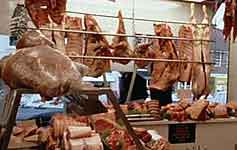
Or maybe you need further convincing...
GET THE VIDEO CD-ROM
MEET YOUR MEAT
!!!!
!!!
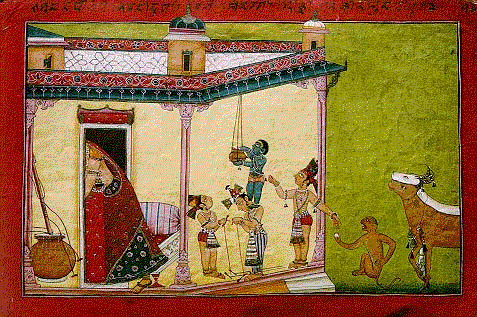
Lord Krishna and Lord Balaram sharing butter with their animal friends.






Vegetarianism in the UK
http://www.ferreri.freeserve.co.uk/vegetarianismUK.html
"I launched out in search of a vegetarian restaurant [in London 1887],
I would trot ten or twelve miles each day, go into a cheap restaurant and
eat my fill of bread, but would never be satisfied. During these wanderings
I once hit a vegetarian restaurant in Farringdon Street. The sight of it
filled me with the same joy that a child feels on getting a thing after
its own heart."
This is an extract from a speech delivered by Gandhi at a Social Meeting
organised by the London Vegetarian Society on 20 November 1931.
We've come a long way since then. Being a vegetarian especially in London, but also in Britain in general, has now become very common, and life for vegetarians is easy, with restaurants, hotels, products catering exclusively for them or also for them.
Here are some statistics.
* There are about 3 million vegetarians in the UK: 5 % of the
adult population. In the latest National Diet & Nutrition Survey, conducted
on 2251 adults aged 19 to 64, 5% claimed to be vegetarian (7% women, 2%
men). The reason for going vegetarian/vegan was: 51% moral or ethical,
29% health, 25% didn’t like the taste of meat. 11% of women aged 19 to
34 claimed to be vegetarian.
* 7 million people in the UK no longer eat meat.
* In the last 10 years, the number of vegetarians in the UK has
practically doubled.
* 2,000 people a week in the UK are joining the "veggie revolution"
and dropping meat completely from their diets.
* Food scares such as BSE and Foot and Mouth have led large numbers
of people to rethink their diets, with 27 % of the population saying that
they would consider giving up meat, and 12 % saying that they were vegetarian
or meat-reducing.
* In a poll of 1,051 university and college students in 2002,
8% of students claimed to be vegetarian. 11% women, 4% men. 20% of the
vegetarians would not eat eggs.
The Vegetarian Society of the United Kingdom is the oldest vegetarian organisation in the world. Many celebrities are vegetarian, including Stella McCartney who is the patron of the Vegetarian Society. She says: "Every week in the UK, many thousands of people are rejecting traditional meat-based meals in favour of something that's fresh, delicious, satisfying, healthy, kinder and good for the environment. Vegetarian food offers this and so much more … Welcome to the most delicious, most talked about, fastest growing food trend of the new millennium - vegetarianism."
Interestingly, Gandhi himself became a vegetarian by choice, as opposed
to cultural tradition and upbringing, after having read Plea for Vegetarianism,
a book by the British author Henry Salt, a true pioneer who also wrote
Animals' Rights, one of the first books ever appeared on the subject.Here
is the continuation of Gandhi's speech at the London Vegetarian Society
meeting, quoted above:
"I saw among them Salt's Plea for Vegetarianism. This I purchased for
a shilling and went straight to the dining room. This was my first hearty
meal since my arrival in England. . . . From the date of reading this book,
I may claim to have become a vegetarian by choice. I blessed the day on
which I had taken the vow before my mother. I had all along abstained from
meat in the interests of truth and of the vow I had taken, but had wished
at the same time that every Indian should be a meat-eater, and had looked
forward to being one myself freely and openly some day, and to enlisting
others in the cause. The choice was now made in favour of vegetarianism,
the spread of which henceforward became my mission."

Diet for the future
http://www.zatang.com/categories/pets&animals/pets/satish/diet.htm
"Vegetarianism is THE diet of the future. Your future! Every week 5,000 people turn their backs on the traditional meat-based diet with all its cruelty and waste and choose a diet which is nutritious as it is delicious - Vegetarianism!"
Vegetarianism is a concept which is fast catching on in India and around the world. With many famous people such as Maneka Gandhi striving to spread the good news of vegetarianism, It is a matter of time till the whole world turns vegetarian.
Meat-eaters soak up the world's water
http://www.ffl.org/html/changing_diets_needed.html
A change in diets may be necessary to enable developing countries to feed their people, say scientists
John Vidal
Monday August 23, 2004
The Guardian
Governments may have to persuade people to eat less meat because of increasing demands on water supplies, according to agricultural scientists investigating how the world can best feed itself. They say countries with little water may choose not to grow crops but trade in "virtual water", importing food from countries which have large amounts of water to save their supplies for domestic or high-value uses. With about 840 million people in the world undernourished, and a further 2 billion expected to be born within 20 years, finding water to grow food will be one of the greatest challenges facing governments. Currently up to 90% of all managed water is used to grow food.
"There will be enough food for everyone on average in 20 years' time, but unless we change the way that we grow it, there will be a lot more malnourished people," said Dr David Molden, principal scientist with the International Water Management Institute (IWMI), which is part-funded by the British government and is investigating global options for feeding growing populations.
"The bottom line is that groundwater levels are plummeting and our rivers are already overstressed, yet there is a lot of complacency about the future," the IWMI report says.
"Western diets, which depend largely on meat, are already putting great pressures on the environment. Meat-eaters consume the equivalent of about 5,000 litres [1,100 gallons] of water a day compared to the 1,000-2,000 litres used by people on vegetarian diets in developing countries. All that water has to come from somewhere."
The consensus emerging among scientists is that it will be almost impossible to feed future generations the typical diet eaten in western Europe and North America without destroying the environment. A meat and vegetable diet, which most people move to when economically possible, requires more water than crops such as wheat and maize. On average, it takes 1,790 litres of water to grow 1kg of wheat compared with 9,680 litres of water for 1kg of beef.
In its report, the IWMI says it it unlikely people will change their eating habits because of concerns about water supplies. "And in many sub-Saharan countries, where the pressure on water will increase most rapidly in the next 20 years, people actually need to be eating more, not less," the report says.
Anders Berntell, the director of the International Water Institute, based in Stockholm, said: "The world's future water supply is a problem that's ... greater than we've begun to realise. We've got to reduce the amount of water we devote to growing food. The world is simply running out of water."
Research suggests that up to 24% more water will be needed to grow the world's food in 20 years, but many of the fastest-growing countries are unable to devote more water to agriculture without sacrificing ecosystems which may be important for providing water or fish. The option of increased world trade in virtual water seems logical, the scientists say, but they recognise that it depends on countries having the money to import their food. "The question remains whether the countries that will be hardest hit by water scarcity will be able to afford virtual water," the report says.
The best options for feeding the world, it says, are a combination of hi-tech and traditional water conservation methods. Improved crop varieties, better tillage methods and more precise irrigation could reduce water consumption and improve yields. Drought-resistant seeds, water harvesting schemes and small-plot technologies such as treadle pumps [simple foot pumps] all have the potential to boost yields by 100%, the report says.
The scientists did not examine the use of GM foods which have been hailed by some companies as the way to avoid big food shortages. "Even without GM foods, in many parts of the world there is the potential to increase water productivity. Even without them there is hope," one of the report's authors said.
Another option considered is that of farmers using more urban waste water for irrigation. It is estimated that up to 10% of the world's population now eat food produced using waste water from towns and cities. Cities are predicted to use 150% more water within 20 years, which will be both a problem and an opportunity. "This means more waste water but also less fresh water available for agriculture. In the future, using waste water may not be a choice but a necessity", the report says.
The authors say western governments need to change their policies: "Agricultural subsidies keep world commodity prices low in poor countries and discourage farmers from investing [in water-saving technologies] because they will not get a return on their investments. Land and water rights are also needed so people will invest in long-term improvements."
Guardian Unlimited © Guardian Newspapers Limited 2004
Food for life: a man's mission
http://seattletimes.nwsource.com/html/food/2001990244_lee28.html
Wednesday, July 28, 2004 - Page updated at 12:00 A.M.
By Judith Blake
Seattle Times staff reporter
"I've always felt really pleased to be alive, and food is an avenue
for sharing that pleasure and giving back.”
— David Lee, Field Roast Grain Meat Co. owner
For some people, life is a meal of many courses, and David Lee is such a man.
In the course he's savoring now, on a side street in Georgetown, he owns a small company making vegetarian "meat" that offers new taste twists for such products and is finding a market across the country.
Earlier in his career, he played a key role in feeding Seattle's homeless — a role whose impact is still felt today. The link joining these and several other turns in Lee's life has been food and his philosophy surrounding it.
"I've always felt really pleased to be alive," he says, and he finds food an avenue for sharing that pleasure and "giving back."
His current setting is a trio of drab, wood-frame houses that have a distinctly downscale look — yet represent a move up in style and taste for meat substitutes.
Here, his Field Roast Grain Meat Co., employing eight, turns out a growing line of flavorful, meat-like loafs, roasts, slices, patties and links made primarily from high-protein wheat-gluten flour, vegetables and seasonings.
The enterprise reflects Lee's own vegetarianism, his rejection of animal farming as "cruel and unethical" and his belief that all life has value. But that doesn't mean he thinks just any kind of meat alternative will do.
"What I want to do is make a (vegetarian) meat for meat eaters," he says — that is, a meat-like product that meat lovers love. "I want to make the best food possible."
Boutique vegetarian fare
Not aimed at the hair-shirt crowd, Field Roast projects an upscale image, using such ingredients as smoked tomatoes, wild mushrooms, hazelnuts and assorted herbs. The holidayish Celebration Roast has a sausage-style meatless stuffing of butternut squash, apples, red wine, grain meat and seasonings.
JOHN LOK / THE SEATTLE TIMES
Nhung Nguyen puts links of barbecue vegeterian sausage into a smoke
rack at Field Roast Grain Meat, which turns out a line of flavorful, meat-like
products made primarily from high-protein wheat-gluten flour, vegetables
and seasonings.
"We like to think we're the boutique of the vegetarian world," says Lee, 46.
Field Roast is sold in the deli sections of Whole Foods Markets and Wild Oats stores across the country (though only the former are in Seattle), and locally in Larry's Markets, PCC Natural Markets, Madison Market and certain restaurants.
Though company sales grew by 40 percent in 2003, Lee says, they remain below $1 million. But he has higher ambitions.
"The prize of our industry," he says, "is distribution in the mass-market stores" — Safeway, Kroger, Albertson's and the like — and that's where he hopes to see his products someday.
Targeting "flexitarians"
Vegetarian purists probably are not the chief Field Roast consumers, Lee says.
"I think it's the emerging 'flexitarian.' They eat tofu one night, meat the next."
That word, flexitarian, is one you could be seeing more of. Meaning a vegetarian who occasionally eats meat, it was declared the most useful new word of 2003 by the American Dialect Society and reflects what is thought to be a fast-growing segment of Americans. The reasons are many, but one appears to be periodic meat scares, such as "mad-cow" disease.
Last winter's detection of "mad-cow" disease in a single Washington cow brought a spike, though not a dramatic one, in Field Roast sales, Lee said.
As for all those flexitarians, Lee says he is one.
"I really am a vegetarian, but I need to be honest and say I'm not hardcore. I don't buy meat myself, but if I go to your house and you serve meat, I'll eat it," to avoid wasting food or embarrassing his host.
Lee explains all this as he leads a visitor through his tiny, USDA-inspected production area with its big steel vats, shiny new sausage-making machine, a slicing table and other equipment.
Using wheat-gluten flour instead of soy has helped achieve Field Roast's strikingly meat-like texture, Lee says. Among the growing array of meat substitutes in stores, soy, with its high-protein content, is by far the most common main ingredient. A few products, such as the Portland-launched Gardenburger, which also uses soy, are widely available and increasingly popular.
Despite the word "meat" — or "roast," "sausage" or "meatloaf" — in the names of Field Roast products, Lee insists he is not making a fake version of animal meat. "The discriminating, upper-end consumer doesn't want fake anything," he says.
Instead, he maintains, he makes genuine meat in another sense of the word — as in solid food, such as nut meats, coconut meat or in this case, grain meat.
"Look it up in the dictionary," he says — something he certainly has done as a confessed word lover who reads dictionaries for fun.
Nutritional content
Nutritional content varies among Field Roast products. In the deli slices, the calories, fat and carbohydrates are relatively low. A 2-ounce serving (about 3.5 to 4 slices) of the wild-mushroom variety contains: 104 calories; 11 grams carbohydrate; 13 grams protein; 3 grams fat (0 saturated).
Celebration Roast lists a larger serving size, 4 ounces, with these per-serving counts: 252 calories; 17 grams carbohydrate; 21 grams protein; 14 grams fat (1 saturated).
With their fancy ingredients, Field Roast products tend to cost more than other meat substitutes. The brand's prices vary significantly by region and store, but they're generally in this range: $2.99 to $3.99 for a 5.5-ounce package of the slices; $2.99 to $4.59 for a ¼-lb. unit of the meatloaf; and $5.99 to $7.99 for a 1-lb. Celebration Roast.
Early love for food
The appetizer course in Lee's life was a comfortable childhood in an upscale Connecticut suburb. Then, when his parents divorced, his English mother returned to England, taking David and his brother. Soon, he found himself in a rigid British boarding school. Mid-high-school, Lee returned to the U.S., lived with his two sisters in Arizona and finished high school in Massachusetts.
Influenced by his mother's love of cooking, Lee knew early on that he wanted to cook for a living. Discouraged from that by his father, he entered art school, dropped out, lived in San Diego, made his way to Seattle in 1984 and finally took up his first love, cooking. Untrained but talented, he first cooked in a restaurant.
Then, in 1987, he made a move whose impact is still felt in Seattle: founding Common Meals, a business that prepared food for the homeless. At one point, Lee recalls, Common Meals churned out 1,500 meals a day for agencies that served homeless people. He also taught the disadvantaged about food and cooking.
"He had this absolute passion for teaching and being involved in programs that taught and provided food," recalls Kay Ach, a retired dietitian who once oversaw Head Start nutrition programs in Seattle. He also had a "really magic" appreciation of ethnic diversity and ethnic foods, she said.
In the early 1990s, burned-out and ready to move on, Lee converted Common Meals to a nonprofit agency and turned it over to others. Common Meals became FareStart, which today both trains the homeless for restaurant jobs and cooks meals for the homeless.
Lee taught cooking for a time at North Seattle Community College and at Whole Foods Market, and did some motivational speaking to food-service providers. He launched Field Roast in 1997.
His interest in ethnic difference shows up in his company's all-Vietnamese staff. A small Buddhist shrine hangs on the lunchroom wall, with incense that employees light daily.
Lee, who lives on Beacon Hill, is Buddhist himself and meditates every day. Hiking is another passion.
One passion he's never had, he says, is the pursuit of wealth.
"I can't believe our focus on luxury right now — the big-screen TV, eating out a lot. It's so wonderful to have a meal at home with family and friends."
He cooks vegetarian meals, loves to read cookbooks and sees lots of movies. Divorced, he has two sons — Ian, 14, and Malcolm, 20, who works at Field Roast as administrative assistant.
What's cooking in the future
Ahead for Field Roast are two new vegetarian sausage products due out in the fall. And, possibly, something more. Once again feeling the urge to move on, Lee would like one day to sell his business to a mainstream animal-meat-products company.
Wouldn't that compromise his vegetarian philosophy? He says not. His products would get wider distribution. "And every time someone buys some Field Roast slices, it means some (animal) meat is not being purchased."
Meanwhile, he's writing a book on how to make vegetarian meats such as his. Not worried about revealing his secrets, he says he'd like everybody — especially some top chefs — to know the techniques and then expand upon them.
It's just the latest course in a many flavored life.
The Best Food in the World
http://www.krishna.com/newsite/main.php?id=141
The Hare Krishna people live on food that's natural, healthy, nonviolent, purified and cheap. And for taste alone, it's great!
On the menu: wholesome foods like fruits, grains, vegetables, milk products, made into meals of countless varieties. No meat, fish, or eggs. And you don't miss them. (You're too satisfied.)
This is a diet that respects the earth and its creatures. And you.
No fads here, no experimental diets. This is a way of eating that people have thrived on—physically and spiritually—for tens of centuries. It has stood the test of time.
When Krishna devotees cook, they cook with devotion, because they're cooking for Krishna. The food is first for Krishna's enjoyment. Then you enjoy it, and the spiritual taste comes through.
An award-winning cookbook—Lord Krishna's Cuisine—offers 799 pages of recipes. You can taste some of them every week at the Sunday feast held at every Hare Krishna center. Or visit one of the justly famous Hare Krishna restaurants.
If everyone ate like the Hare Krishna people, the world would be happier, healthier, more peaceful, and more pure. The Krishna diet. Try it!
How Deity Worship in Temples in India Feeds Many Local People
"Temple worship, you go in India, there are some temples still. Daily,
they are spending thousands of dollars for temple worship. Daily. The process...
In Jagannatha temple, fifty-six times offered prasada, and any time you
go they will supply you prasada for one thousand persons. It is all ready.
Still. Although India is being advertised there is no food, but if you
go to Jagannatha temple, any time, and ask the manager that "We have come,
one thousand devotees. Please supply us prasada." "Yes, ready." (laughter)
So that is being done. The arrangement is there since last two thousand
years. The Jagannatha has property, there is production, there is good
management. That is going on. Similarly, there is another temple, Nathadwar.
They're also spending thousands of... In Madras also, there are many temples.
There is a big estate. They are also collecting money daily, $4,000, $5,000.
Yes. Still. The temple arrangement is there."
Bhagavad-gita 3.1-5
HDG A.C. Bhaktivedanta Swami Prabhupada, Los Angeles, December 20, 1968, Lectures & Classes 681220BG.LA
pathyam pütam anäyastam
ähäryam sättvikam smritam
räjasam chendriya-preshtham
tämasam chärti-däshuchi
"Food that is wholesome, pure and obtained without difficulty is in
the mode of goodness, food that gives immediate pleasure to the senses
is in the mode of passion, and food that is unclean and causes distress
is in the mode of ignorance." (Srimad Bhagavatam 11.25.28.)
Have Mercy on the Animals
(song by Krsnautix, Kalki Records
1987.)
See the little fawn, move too fast
and she'll be gone.
She knows to run away, when
the hunter comes to spoil her play.
Have Mercy on the Animals, they
have feelings too.
Have Mercy on the Animals,
they feel just like we do.
Mother Cow's out in the field, so
much milk she can yeild.
Father bull he tills the
land, providing grain for beast and man.
Have Mercy on the Animals, they
have feelings too.
Have Mercy on the Animals,
they feel just like we do.
See the birds up in the tree, they
also have their families.
Build their nests way up
high - just like you they don't want to die.
Have Mercy on the Animals, they
have feelings too.
Have Mercy on the Animals,
they feel just like we do.
Have Mercy, the mercy will be shown
to you.
Have Mercy, and mercy will
be shown to you.

The karmik result for killing others and eating their live or dead bodies
ye tvaneva.mvido'santaH stabdhaaH
sadabhimaaninaH |
pashuun druhyanti vishrabdhaaH
pretya khaadanti te cha taan ||
BhAgavata PurANa 11:5:14 ||
Word 4 word:
ye - those who; tu - but; anevam-vidaH - not knowing these facts; asantaH
- very impious; stabdhaaH - presumptuous; sat-abhimaaninaH - considering
themselves saintly; pashuun - animals; druhyanti - they harm; vishrabdhaaH
- being innocently trusted; pretya - after leaving this present body; khaadanti
- they eat; te - those animals; cha -and; taan - them.
Translation:
Those sinful persons who are ignorant of actual
religious principles, yet consider themselves to be completely pious, without
compunction commit violence against innocent animals who are fully trusting
in them. In their next lives, such sinful persons will be eaten by the
same creatures they have killed in this world. (Srimad BhAgavata PuraaNa
11:5:14.)
Sva maamsam para maamsEna yah pushNaati
naraadhama: /
RuravE Bhakshayishyanti
tasya maamsam yamaalayE” //
MEANING
“ In the hells, ferocious dogs would pounce upon, tear
to pieces and eat away the flesh of one who nourishes his own flesh with
the flesh of other living beings”
“RAMAPIRANAI KARPOM” EXCERPTS FROM BOOK BY H.H. SRIMAD
ANDAVAN OF
POUNDARIKAPURAM SWAMI ASHRAMAM” Part 8
(Translation by Anbil Ramaswamy) (page 40 of the book)
Who Are the Six Kinds of Aggressors (Aatataayees)
ANSWER: (page 377 of the book)
“agnida: garada: chaiva sustrOnmatha: Dhanaapahaa /
KsEtra Dhaara hara: cha yetaan shad vidhyaath aatathaayina:
//
(Manu Smriti)
MEANING:
The following people are called “Aatataayees” (aggressors
that are punishable):
It is said that one who kills his preceptor, children, Brahmins well versed in Shaastras. also belongs to this category. No sin would accrue, if these are killed says Manu. Thus one can see how those who forcibly take another's life/body, and killing it, eat it etc are the most sinful, selfish, and cold hearted of persons. It is very conceivable that the purport to their suffering be that of the words of George Bernard Shaw.
This is confirmed in the purport of Srila A.C. Bhaktivedanta Swami Prabhupada's Bhagavad Gita As It Is purport 1:36.
A POEM BY GEORGE BERNARD SHAW
We are living graves of murdered
beasts
Slaughtered to satisfy our appetites.
We never pause to wonder at our
feasts,
If animals like men could possibly
have rights.
.
We pray on Sunday that we may have
light,
To guide our footsteps on the paths
we tread.
We are sick of war, we do not want
to fight,
And we gorge ourselves
upon the dead.
.
Like Carrion Crows we live and
feed on meat,
Regardless of the suffering and
pain
We cause by doing so, in this we
treat,
Defenceless animals for sport or
gain -
.
How can we hope in this world to
attain
The peace we say we are so anxious
for,
We pray for it o'er hetacomba of
slain,
To God while outraging the moral
law,
Thus cruelty begets the offspring
--- WAR !
SRILA PRABHUPADA'S DAILY QUOTE
The animal propensity is to exploit
others.And
human propensity should be to
do good to
others. That is the difference
between animal
propensity and human propensity.
Seattle, September 24, 1968
Second or Third Annual international Mayapur festival circa 1970s
It was the second or third international
Mayapur festival.We had just finished the four storeyed building which
is today known as the Lotus building.(This Lotus building was the temporary
mandir at that time.) Srila Prabhupada had invited several devotees from
all over the world for the inauguration of this mandir. On this occassion
we had a big feast. After the feast Prabhupada took the prasadam and then
a little rest. But his rest was disturbed by the howling of the dogs and
he got up. Prabhupada said, "Bring all the sanyasis, bring the GBC immediately!
Bring them! "Usually if Prabhupada wanted to say something, he would say,
"Bring my secretary". But in Mayapur he would call everyone. He would want
everyone to hear what he was saying. At that time the devotees were just
'recovering' from a big feast. When Prabhupada called, all devotees came
down rushing, "what is Prabhupada calling for? What is happening?" They
saw Prabhupada looking out of the windows intently with tears in his eyes-he
was crying! They looked out and saw a big pile of leaf plates thrown at
the back of the temple after the feast. There were about fifteen dogs,
and about fifteen to twenty boys and girls, little kids between eight and
fourteen years, picking through the leaves and fighting off the dogs. They
were eating the leftovers and licking the leaves. They were ordinary village
children who were basically clean but poor.
Prabhupada was silent,and everyone
was astonished as to what Prabhupada was trying to communicate. Then Prabhupada
revealed his mind,"How hungry they must be!They are picking the prasadam
from the pile-they must be so hungry!We must arrange for their prasadam!If
you want to make this a mandir,a house of Krsna,then you must see that
within ten kilometres radius,no one goes hungry. That will be your success.
Krsna is everyone's father.Remembering Srila Prabhupada - .ems How can
the son go hungry in the presence of the father? Immediately arrange to
distribute the prasadam."
When prabhupada wanted something
done immediately,it meant the next day was too late.But anyway,we could
not get it together before the next day.We just had a big tent in those
days,and since Prabhupada wanted prasadam distribution,we cooked some kichidi,and
in this way started to distribute the prasadam.
Prabhupada said that if we could
have prasadam distribution center at every ten square kilometers throughout
India,then we would transform the whole of India.People will become so
grateful to ISKCON that they will all definitely accept Lord Caitanya's
movement-it will be the most important movement,and they will follow very
strictly. Simply by prasadam distribution,all the effects of Kali Yuga
can be stopped.
- Heard in a lecture from His Holiness Jayapataka Swami Maharaja.

Religious Stands on Vegetarianism
Vaishnavism - Hinduism
Islam
Christianity - Bible - Book
of Morman - 7th Day Adventist
Buddhism
Judaism
What's in the Scriptures Against
Killing and Meat-Eating
http://www.geocities.com/RainForest/2062/argu.HTML
http://www.hknet.org.nz/Vege-How2ArguNO-M.html
Hindu scripture speaks clearly and forcefully on nonkilling and vegetarianism. In the ancient Rig Veda, we read: "O vegetable, be succulent, wholesome, strengthening; and thus, body, be fully grown." The Yajur Veda summarily dictates: "Do not injure the beings living on the earth, in the air and in the water." The beautiful Tirukural, a widely-read 2,000-year-old masterpiece of ethics, speaks of conscience: "When a man realizes that meat is the butchered flesh of another creature, he must abstain from eating it." The Manu Samhita advises: "Having well considered the origin of flesh and the cruelty of fettering and slaying of corporeal beings, let one entirely abstain from eating flesh." In the yoga-infused verses of the Tirumantiram, warning is given of how meat-eating holds the mind in gross, adharmic states: "The ignoble ones who eat flesh, death's agents bind them fast and push them quick into the fiery jaws of hell (Naraka, lower consciousness)." The roots of noninjury, nonkilling and nonconsumption of meat are found in the Vedas, agamas, Upanishads, Dharma Shastras, Tirumurai, Yoga Sutras and dozens of other sacred texts of Hinduism. Here is a select collection.
Vedas and agamas, Hinduism's Revealed Scriptures
LET YOUR AIMS BE COMMON, and your hearts be of one accord,
and all of you be of one mind, so you may live well together.
Rig Veda Samhita 10.191
Protect both our species, two-legged and four-legged.
Both food and water for their needs supply. May they with us increase in
stature and strength. Save us from hurt all our days, O Powers!
Rig Veda Samhita 10.37.11. VE, 319
One who partakes of human flesh, the flesh of a horse
or of another animal, and deprives others of milk by slaughtering cows,
O King, if such a fiend does not desist by other means, then you should
not hesitate to cut off his head.
Rig Veda Samhita, 10.87.16, FS 90
Peaceful be the earth, peaceful the ether, peaceful heaven,
peaceful the waters, peaceful the herbs, peaceful the trees. May all Gods
bring me peace. May there be peace through these invocations of peace.
With these invocations of peace which appease everything, I render peaceful
whatever here is terrible, whatever here is cruel, whatever here is sinful.
Let it become auspicious, let everything be beneficial to us.
Atharva Veda Samhita 10. 191. 4
Those noble souls who practice meditation and other yogic
ways, who are ever careful about all beings, who protect all animals, are
the ones who are actually serious about spiritual practices.
Atharva Veda Samhita 19.48.5. FS, 90
If we have injured space, the earth or heaven, or if we
have offended mother or father, from that may Agni, fire of the house,
absolve us and guide us safely to the world of goodness.
Atharva Veda Samhita 6.120.1. VE, 636
You must not use your God-given body for killing God's
creatures, whether they are human, animal or whatever.
Yajur Veda Samhita 12.32. FS, 90May all beings look at
me with a friendly eye. May I do likewise, and may we all look on each
other with the eyes of a friend.
Yajur Veda 36.18.
Nonviolence is all the offerings. Renunciation is the
priestly honorarium. The final purification is death. Thus all the Divinities
are established in this body.
Krishna Yajur Veda, Prana Upanishad 46-8. VE, 413-14
To the heavens be peace, to the sky and the earth; to
the waters be peace, to plants and all trees; to the Gods be peace, to
Brahman be peace, to all men be peace, again and again-peace also to me!
O earthen vessel, strengthen me. May all beings regard me with friendly
eyes! May I look upon all creatures with friendly eyes! With a friend's
eye may we regard each other!
Shukla Yajur Veda Samhita 36.17-18. VE, 306; 342
No pain should be caused to any created being or thing.
Devikalottara agama, JAV 69-79. RM, 116
The Mahabharata and Bhagavad Gita, Epic History
The very name of the cows is aghnya, indicating that
they should never be slaughtered. Who, then could slay them? Surely, one
who kills a cow or a bull commits the most heinous crime.
Mahabharata, Shantiparva 262.47. FS,pg. 94
The purchaser of flesh performs himsa (violence) by his
wealth; he who eats flesh does so by enjoying its taste; the killer does
himsa by actually tying and killing the animal. Thus, there are three forms
of killing: he who brings flesh or sends for it, he who cuts off the limbs
of an animal, and he who purchases, sells or cooks flesh and eats it -all
of these are to be considered meat-eaters.
Mahabharata, Anu. 115.40. FS, pg 90
He who desires to augment his own flesh by eating the
flesh of other creatures lives in misery in whatever species he may take
his birth.
Mahabharata, Anu. 115.47. FS, pg. 90
One should never do that to another which one regards
as injurious to one's own self. This, in brief, is the rule of dharma.
Yielding to desire and acting differently, one becomes guilty of adharma.
Mahabharata 18.113.8.
Those high-souled persons who desire beauty, faultlessness
of limbs, long life, understanding, mental and physical strength and memory
should abstain from acts of injury.
Mahabharata 18.115.8.
Ahimsa is the highest dharma. Ahimsa is the best tapas.
Ahimsa is the greatest gift. Ahimsa is the highest self-control. Ahimsa
is the highest sacrifice. Ahimsa is the highest power. Ahimsa is the highest
friend. Ahimsa is the highest truth. Ahimsa is the highest teaching.
Mahabharata 18.116.37-41.
He who sees that the Lord of all is ever the same in all
that is-immortal in the field of mortality-he sees the truth. And when
a man sees that the God in himself is the same God in all that is, he hurts
not himself by hurting others. Then he goes, indeed, to the highest path.
Bhagavad Gita 13. 27-28. BgM, pg. 101
Nonviolence, truth, freedom from anger, renunciation,
serenity, aversion to fault-finding, sympathy for all beings, peace from
greedy cravings, gentleness, modesty, steadiness, energy, forgiveness,
fortitude, purity, a good will, freedom from pride-these belong to a man
who is born for heaven.
Bhagavad Gita 16.2-3. BGM, pg. 109
Tirumantiram and other Scriptures
Many are the lovely flowers of worship offered to the
Guru, but none lovelier than non-killing. Respect for life is the highest
worship, the bright lamp, the sweet garland and unwavering devotion.
Tirumantiram 197
SPIRITUAL MERIT and sin are our own making. The killer
of other lives is an outcast. Match your words with your conduct. Steal
not, kill not, indulge not in self-praise, condemn not others to their
face.
Lingayat Vachanas
AHIMSA IS NOT CAUSING pain to any living being at any
time through the actions of one's mind, speech or body. Sandilya UpanishadWhen
mindstuff is firmly based in waves of ahimsa, all living beings cease their
enmity in the presence of such a person.
Yoga Sutras 2.35. YP, pg. 205
Those who are ignorant of real dharma and, though wicked
and haughty, account themselves virtuous, kill animals without any feeling
of remorse or fear of punishment. Further, in their next lives, such sinful
persons will be eaten by the same creatures they have killed in this world.
Shrimad Bhagavatam 11.5.4. FS, pg, 90
The Tirukural, Preeminent Ethical Scripture
Perhaps nowhere is the principle of nonmeat-eating so
fully and eloquently expressed as in the Tirukural, written in the Tamil
language by a simple weaver saint in a village near Madras over 2,000 years
ago. Considered the world's greatest ethical scripture, it is sworn on
in South Indian courts of law.It is the principle of the pure in heart
never to injure others, even when they themselves have been hatefully injured.
What is virtuous conduct? It is never destroying life, for killing leads
to every other sin.
312; 321, TW
Harming others, even enemies who harmed you unprovoked,
assures incessant sorrow. The supreme principle is this: never knowingly
harm any one at any time in any way.
313; 317, TW
What is the good way? It is the path that reflects on
how it may avoid killing any living creature. Refrain from taking precious
life from any living being, even to save your own life.
324; 327, TW
How can he practice true compassion Who eats the flesh
of an animal to fatten his own flesh?
TK 251, TW
Riches cannot be found in the hands of the thriftless.
Nor can compassion be found in the hearts of those who eat meat.
TK 252, TW
Goodness is never one with the minds of these two: one
who wields a weapon and one who feasts on a creature's flesh.
TK 253, TW
If you ask, "What is kindness and what is unkind?" it
is not killing and killing. Thus, eating flesh is never virtuous.
TK 254, TW
Life is perpetuated by not eating meat.The clenched jaws
of hell hold those who do.
TK 255, TW
If the world did not purchase and consume meat, there
would be none to slaughter and offer meat for sale.
TK 256, TW
When a man realizes that meat is the butchered flesh of
another creature, he must abstain from eating it.
TK 257, TW
Perceptive souls who have abandoned passion will not feed
on flesh abandoned by life.
TK 258, TW
Greater than a thousand ghee offerings consumed in sacrificial
fires is to not sacrifice and consume any living creature.
TK 259, TW
All that lives will press palms together in prayerful
adoration of those who refuse to slaughter and savor meat.
TK 260, TW
The Hinduscriptures from the oldest Vedic to all the later layers in time all advocate vegetarianism and not killing animals and certainly never offer animals in their Yajnas!
The Vedic word frequantly mentioned is Aghnya = not to be killed. This word was in particular used for cows.
Aahavaniiye maamsapratishedha (Katyayana Sutra)
That which is used in Yajna (aahavaniiya) must be vegetarian
Maa himsyaat sarvabhuutaani. (RigVeda)
No creature/animal should be killed.
Yah paurusheyena kravishaa samankte yo ashvyena pashunaa yaatudhaanah,
Yo aghyaayaa bharati kshiiramagne teshaam shirshaani harasaapi vrshcha.
(RV 10.87.16)
The evil person who kills or eats the meat of a horse or cow deserves to be terminated.
Dhaanaa dhenurabhavad, vatso’syaastilo’bhavat. (AtharvaVeda 18.4.32)
Rice is named as ‘cow’ and sesame as ‘calf’.
[Just like someone saying ‘I want the meat of hazel = I want the nut
of hazel]
Maamsapaakapratishedhashcha tadvat. (MiimaamsaSuutra 10.3.65)
Killing and eating meat is totally prohibited.
Dhenuvachcha ashvadakshinaa. (MS 10.3.65)
Like a cow is given (in charity) so also a horse.
Suraam matsyaan madhu maamsamaasavam krsaraudanam,
Dhuurttaih pravartitam hyetannaitad vedeshu kalpitam. (Mahabharata,
ShaantiParvan 265.9)
It is only the evil-minded hypocrites who started telling that Vedic
Yajnas involve intoxicants and meat eating. It is not in the Vedas.
[This comment must have been around the time, far beyond the Bharata
Battle and in post-Vedic times, when many customs arrived in the Vedic
Heartland, which were totally foreign to its culture]
The full Anushaasana Parvan of the Mahaabhaaratam discusses the evils of meat eating:
Akhaadannanumodamshcha bhaavadoshena maanavah,
Yo’numodati hanyantam so’pi doshena lipyate. (MB, AnushaasanaParvan
115.39)
The one who himself doesn’t eat meat but even if he gives his consent to eat meat or to kill an animal, he becomes equally sinful as them.
Ijyaayajnashrutikrtairyaa maargairabudho’dhamah,
Hanyaajjantuun maamsagrdhnuh sa vai narakabhaangnarah. (MB, AP 115.43)
The meateater who kills an animal in the name of Vedic Yajna or tells that it is a requirement of the Yajna is a sinner and he will be a person who will dwell in hell.
Aahartaa chaanumantaa cha vishastaa krayavikrayii,
Samskartaa chopabhoktaa cha khaadakaah sarva eva te. (MB, AP 115.45)
The one who brings an animal to be killed, the one who buys an animal to be killed, the one who sells, buys, cooks and eats the meat are all sinners.
Na dadyaadaamisham shraaddhe na chaadyaad dharmatattvavit,
Munyannaih, syaatparaa priitiryathaa na pashuhimsayaa. (Bhaagavatam
7.15.7)
It is Dharma that in the Shraaddha feast he should never offer meat
nor should eat meat. Only vegetarian food must be offered because meat
is obtained by killing.
[One can understand that in the days of this particular verse, the
mainstream Hindus were confronted with people starting to eat meat]
Naitaadrshah paro dharmo nrnaam saddharmaamichchhataam,
Nyaaso dandasya bhuuteshu manovaakkaayajasya yah. (Bhaagavatam 7.15.8)
This is the best Dharma to observe for everyone that one should not
hurt other beings even in his thoughts.
ManuSmriti or ManavaDharmaShastra
Manu strongly admonishes that one should never drink and should never even smell any intoxicant like wine. (MS. 11.146-149)
Manu asserts that selling, buying, cooking and eating meat is a sin which is as great as killing an animal itself. (MS 5.15)
Gaudii Paishtii cha Maadhvii cha Vijneyaa trividhaa suraa.
Yathaivaika tathaa sarvaa na paatavyaa dvijottamaih. (MS 11.94)
Yaksharakshah pishaachaannam madyam maamsam suraasavam.
Tad braahmena naattavyam devaanaamashnataa havih. (MS 11.95)
Brahmans, Kshatriyas and Vaishyas should never drink wine, liquor or intoxicants of any kinds, because intoxicants, wine, liquor and meat of animals are the food of Yakshas, Rakshasas and Pishachas (all kind of non-Vedic people or even demons). So they mustn’t consumed.
Naakrtvaa praaninaam himsaam maamsamutpadyate kvachit.
Na cha praanivadhah svargyastamaanmaamsam vivarjayet. (MS 5.48)
Anumantaa vishasitaa nihantaa krayavikrayii.
Samskartaa chopahartaa cha khaadakashchetighaatakaah (MS 5.51)
Flesh of animals is obtained only after killing him, which is a sin,
and the killer of animals never enters the celestial abode.
All those involved in killing, consenting the killing, helping the
killing, carrying, selling, buying, cooking and eating the meat of an animal
are equally sinful as the killing of that animal.
Incorrect view of Hindus (Shraaddha ritual)
Annam tu saadhikshiiram goghrtam sharkaraanvitam. (Maasam) priinaati
vai sarvaanpitrnityaaha keshavah. (Matsya Purana 17.30)
Vegetarian food prepared with pure butter, milk, sugar and curd, etc.
are most pleasing to the Pitr.
Dvau maasau matsyamaamsaena triinmaasaanhaarine tu.
Aurashnenaatha chaturah shaakunenaatha pancha vai. (MP 17.31)
Shanmaasam chhaagamaamsena trnyanti pitarastathaa.
Sapta paarshatamaamsena tathaashtavenajena tu. (MP 17.32)
Dasa maasaamstu trnyanti varaahamahishamishaih.
Shashakuurmajamaamsena maasaanekaadeshaiva. (MP 17.33)
Samvatsaram tu gavyena payasaa paayasena cha.
Rauravena cha trpyanti maasaanpanchadashaiya tu. (MP 17.34)
Vaardhranisasya maamsena trptirdvaadashavarshikii.
Kaalashaakena chaanantaa khadgamaamsena chaiva hi. (MP 17.35)
Verses 31 to 35 describe the acts of cooking and offering of all kinds of meat (fish, gazelle, sheep, special birds, goat, deer, black deer, pig, buffalo, rabbit, turtle, special deer, rhino) to Pitr, which is totally out of place and out of context, and it appears to have been deliberately interpolated. The 36th verse again goes like this:
Yatkimchinmadhusammishram gokshiiram ghrtapaayasam,
Dattamakshayamityaahuh pitarah puurvadevataah. (MP 17.36)
Apart from the cow’s milk, honey and the sweet pudding made of milk
and rice and sugar with dry nuts satifies Pitr forever.
Interpolation in Aashvalayana GrhyaSutra 5 (Shraaddha)
In the end of this chapter there are 45 sutras on Shuulagava which is
a ceremony to sacrifice a bull/ox for Shiva to appease him.
Everybody familiar with Shiva and Nandinii, knows that that is impossible.
If Ashvalayana was a gotra of Vasishtha, as stated in the Sutras, then
that is equally impossible, because Vasishtha owned Nandinii, and was famous
for his protection of cows. And he was a Shaiva.
Note
It is very significant that most of the interpolated verses on eating
of animal flesh is in relation to the Shraaddha ritual. The rest are in
other Samskara ceremonies.
The Harivamsha an appendix to the Mahabharata describes in the Giri
Utsava Varnana the sacrifice of bulls and buffaloes in the Govardhana worships.
One familiar with the Krshna worship does understand the ridiculous statement.
In the Paraskara GrhyaSutra one comes across the description of a 6
month old baby who has to be fed with meat in the Annapraashana Samskara
ceremony. How disgustful and obviously a horrid interpolation.
Source:
Swami Prakshananda: The True History and Religion of India
2001, Delhi. Motilal Banarsidass.
(additional remarks, changes and new order done by me)
Edited by Ishwa (09/20/02 04:15 PM)
Ashvamedha and Purushamedha are not sacrifices in the sense of killings
of Ashva and Purusha, as wrongly translated by the first generations of
indologists (who were missionaries), but is a ritual in which Ashva ad
Purusha play the central role in establishing or knowing/understanding
how the balance of power respectively the division in society is. Would
the Rajasuya then mean the pressing=killing of the Raja?
Medha is a word which has
a cognate in Medha=Wisdom or Medhira, which means the same. (Medha comes
from older obsolete mazdha, which is attested in Avestan (Ahura) Mazda,
the Varuna of the ancient Iranis. No Varuna is associated with killing
of animals.
The only time people are sacrificed is in the Antyeshti Yajna, or cremation ceremony.
Besides this, the understanding that the potency of the brahmanas was
very much different in previous times, they were much stronger and more
pure. The brahmanas would recite Vedic mantras and lead an animal to the
sacrificial fire, however the animal wasn't just thrown into the fire and
its body then eaten as the Christian missionaries presented "animal sacrifice
of the pagan savages" to be. Rather prior to the Kali yuga an old animal
was lead to the fire, and by the perfect recitation of sacred Vedic mantras
when the animal was lead into the fire it's old body was rejuvenated by
the flames rather than consumed and a young healthy body inherited.
Due to the lack of potency
of the brahmanas in the Kali yuga, it is condemned that one even try to
perform such a sacrifice in this age. There were several advocates of Ahimsa
in this regard; Lord Buddha and His doctrine of Ahimsa, the saint Madhwacharya
(circa 13th centuary) who stopped animal sacrifice again in India and had
Vedic brahmanas offer grain balis into the fire with the mantra idam krsnaya
idan na mama, Chaitanya mahaprabhu is mentioned in the Pratisagar parva
19th Chapter of Kaliyuga khanda of Bhavishya purana as being the instigator
for this.
Gomedha doesn't mean the killing of Go=cow, but it means agriculture. It is known in old Iran-Afghanistan as Gomez, which is only used in the sense of agriculture. Both cultures are cognate, so are their customs. Go-medha then is the proper sacrifice of the animals strength in using it in agriculture within the daivi varnashram system, that dedicates all of men's natural attributes and actions, as well as that of those animals in their care into the blissful service of Govinda (pleaser of the cows and the senses) - Gopala (He who looks after the cows).
Random Christian Quotes upholding Vegetarianism:

And God said, behold I have given you every herb bearing
seed, which is upon the face of the earth, and every tree, in the which
is the
fruit of a tree yeilding seed, to you it shall be for
food. And to every beast of the earth, and to every fowl of the air, and
to every thing
that creepeth upon the earth, wherein there is life,
I have given every green herb for meat [=food]: and it was so.
Genesis 1, 29 & 30
Thou shalt not kill.
Exodus 20:13 (The Bible)
Speak to the Earth, and it shall teach thee.
Job 12:8 (The Bible)
A righteous man regardeth the life of his beast; but the
tender mercies of the wicked are cruel.
Proverbs 12:10 (The Bible)
Open thy mouth for the dumb, in the cause of all such
as are appointed to destruction.
Proverbs 31:8 (The Bible)
Even one thing befalleth them: as the one dieth, so dieth
the other; yea, they have all one breath, so that a man hath no pre-eminence
above a beast.
Ecclesiastes 3:19 (The Bible)
The wolf shall dwell with the lamb, and the leopard shall
lie down with the kid; and the calf and the young lion and the fatling
together;
and a little child shall lead them ... They shall not
hurt nor destroy in all my holy mountain; for the earth shall be full of
the knowledge
of the Lord, as the waters cover the sea.
Isaiah 11:6-9 (The Bible)
He that killeth an ox is as if he slew a man; he that
sacrificeth a lamb, as if he cut off a dog's neck; he that offereth an
oblation, as if he
offered swine's blood; he that burneth incense, as if
he blessed an idol. Yea, they have chosen their own ways, and their soul
delighteth
in their abominations.
Isaiah 66:3 (The Bible)
Blessed are the merciful, for they shall receive mercy.
Matthew 5:7 (The Bible)
Be not overcome of evil, but overcome evil with good.
Romans (The Bible)
Hurt not the earth, neither the sea, nor the trees.
Revelation 7:3 (The Bible)
The unnatural eating of flesh-meats is as polluting as
the heathen worship of devils, with its sacrifices and its unpure feasts,
through
participation in which a man becomes a fellow-eater with
devils.
Clementine Homilies (Second Century AD)
A tree is known by its fruit; a man by his deeds. A good
deed is never lost; he who sows courtesy reaps friendship, and he who plants
kindness gathers love.
St.Basil, Bishop of Caesarea (329-379 AD)
The saints are exceedingly loving and gentle to mankind,
and even to brute beasts ... Surely we ought to show them [animals] great
kindness and gentleness for many reasons, but, above
all, because they are of the same origin as ourselves.
St.John Chrysostom (c.347-407)
It should not be believed that all beings exist for the
sake of the existence of man. On the contrary, all the other beings too
have been
intended for their own sakes and not for the sake of
anything else.
Rabbi Moses ben Maimon (1135-1204)
[Regarding animals and their offspring], there is no difference
between the pain of humans and the pain of other living beings, since the
love and tenderness of the mother for the young are not
produced by reasoning, but by feeling, and this faculty exists not only
in
humans but in most living beings.
Rabbi Moses ben Maimon (1135-1204)
If you have men who will exclude any of God's creatures
from the shelter of compassion and pity, you will have men who deal likewise
with their fellow men.
St.Francis of Assisi (1181-1226)
Not to hurt our humble brethren is our first duty to them,
but to stop there is not enough. We have a higher mission - to be of service
to
them wherever they require it.
St.Francis of Assisi (1181-1226)
You, who are innocent, what have you done worthy of death!
(On seeing animals being killed for food)
Richard of Wyche, Bishop of Chichester (1197-1253)
And if thy heart be straight with God, then every creature
shall be to thee a mirror of life and a book of holy doctrine, for there
is no
creature so little or so vile, but that sheweth and representeth
the goodness of God.
Thomas A Kempis (1379-1471)
Be careful that the love of gain draw us not into any
business which may weaken our love of our Heavenly Father, or bring
unnecessary trouble to any of His creatures.
John Woolman (1720-1772)
I tremble for my species when I reflect that God is just.
Thomas Jefferson (1743-1826)
I am to ask your Lordships, in the name of that God who
gave to man his dominion over the lower world, to acknowledge and
recognise that dominion to be a moral trust.
Lord (Thomas) Erskine (1750-1823)
...the primitve Christians, by laying so much stress upon
a future life in contradiction to this life, and placing the lower creatures
out of
the pale of sympathy, and thus had the foundation for
this utter disregard of animals in the light of our fellow creatures.
Anna Bronwell Jameson (1794-1860)
It is almost a definition of a gentleman to say he is
one who never inflicts pain.
Cardinal Newman (1801-1890)
...and we have so far improved upon the custom of Adam
and Eve, that we generally furnish forth our feasts with a portion of some
delicate calf or lamb, whose unspotted innocence entitles
them to the happiness of becoming our sustenance.
Nathaniel Hawthorne (1804-1864)
For fidelity, devotion, love, many a two-legged animal
is below the dog and the horse. Happy would it be for thousands of people
if
they could stand at last before the Judgement Seat and
say "I have loved as truly and I have lived as decently as my dog." And
yet we
call them "only brutes"!
Henry Ward Beecher (1813-1887)
Without the perfect sympathy with the animals around them,
no gentleman's education, no Christian education, could be of any possible
use.
John Ruskin (1819-1900)
Love animals: God has given them the rudiments of thought
and joy untroubled. Do not trouble their joy, don't harrass them, don't
deprive them of their happiness, don't work against God's
intent. Man, do not pride yourself on superiority to animals; they are
without
sin, and you, with your greatness, defile the earth by
your apppearance on it, and leave the traces of your foulness after you
- alas, it is
true of almost every one of us!
Fyodor Dostoyevsky (1821-1881)
Love all God's creatures, the animals, the plants. Love
everything to perceive the divine mystery in all.
Fyodor Dostoyevsky (1821-1881)
He who does evil that good may come, pays a toll to the
devil to let him into heaven.
Hare and Charles (c. 1830)
Heaven is by favor; if it were by merit your dog would
go in and you would stay out.
Mark Twain (1835-1910)
The animal world being altogether external to the scheme
of redemption, was regarded as beyond the range of duty, and the belief
that
we have any kind of obligation to its members has never
been inculcated - has never, I believe, been even admitted - by Catholic
theologians.
W.E.H.Lecky (1838-1903)
Spain and southern Italy, in which Catholicism has most
deeply implanted its roots, are even now, probably beyond all other countries
in Europe, those in which inhumanity to animals is most
wanton and unrebuked.
W.E.H.Lecky (1838-1903)
...the atrocious doctrine that beast and birds were made
solely for man's use and pleasure, and that he has no duties towards them.
Wilfrid Scawen Blunt (1840-1922)
It is a deplorable fact that many Christians are so accustomed
to a certain creed and dogma of their own that they will adhere to it even
at the sacrifice of the great moral laws of love and
mercy.
E.D.Buckner MD, AM, PhD (1843-1907)
Man should regard lower animals as being in the same dependent
condition as minors under his government ... For a man to torture an
animal whose life God has put into his hands, is a disgrace
to his species.
E.D.Buckner MD, AM, PhD (1843-1907)
You think those dogs will not be in heaven! I tell you
they will be there long before any of us.
Robert Louis Stevenson (1850-1894)
The great discovery of the nineteenth century, that we
are of one blood with the lower animals, has created new ethical obligations
which have not yet penetrated the public conscience.
The clerical profession has been lamentably remiss in preaching this obvious
duty.
William Ralph Inge (1860-1954)
God gave our first parents the food He designed that the
race should eat. It was contrary to His plan to have the life of any creature
taken. There was to be no death in Eden. The fruit of
the trees in the garden was the food man's wants required.
- Ellen White, founder Seventh Day Adventists (1864)
Kindness to all God's creatures is an absolute rock-bottom
necessity if peace and righteousness are to prevail.
Sir Wilfred Grenfell (1865-1940)
Cruelty to animals is the degrading attitude of paganism.
Cardinal Hinsley (1865-1943)
The infliction of cruelty with a clear conscience is a
delight to moralists. That is why they invented hell.
Bertand Russell (1872-1970)
I hated the things they believe in, the things they so
innocently and charmingly pretended. I hated the sanctimonious piety that
let people
hurt helpless creatures. I hated the prayers and the
hymns - the fountains and the red images that coloured their drab music,
the
fountains filled with blood, the sacrifice of the lamb.
Ellen Glasgow (1874-1945)
Compared with that of Taoists and Far Eastern Buddhists,
the Christian attitude toward Nature has been curiously insensitive and
often
downright domineering and violent. Taking their cue from
an unfortunate remark in Genesis, Catholic moralists have regarded animals
as mere things which men do right to regard for their
own ends....
Aldous Huxley (1894-1963)
If we understand and feel that the greatest act of devotion
and worship to God is not to harm any of His beings, we are loving God.
Meher Baba (1894-1969)
To love God in the most practical way is to love our fellow
beings. If we feel for others in the same way as we feel for our own dear
ones, we love God.
Meher Baba (1894-1969)
If we suffer in the sufferings of others and feel happy
in the happiness of others, we are loving God.
Meher Baba (1894-1969)
The diet of animals is vegetables and grains. Must the
vegetables be animalized, must they be incorporated into the system of
animals,
before we get them? Must we obtain our vegetable diet
by eating the flesh of dead creatures? God provided fruit in its natural
state for
our first parents. He gave to Adam charge over the garden,
to dress it, and to care for it, saying, "To you it shall be for meat."
One
animal was not to destroy another animal for food."
- Ellen White, founder Seventh Day Adventists (1896)
Let our ministers and canvassers step under the banners
of strict temperance. Never be ashamed to say, "No thank you; I do not
eat
meat. I have conscientious scruples against eating the
flesh of dead animals.
- Ellen White, founder Seventh Day Adventists, 1901
Flesh was never the best food; but its use is now doubly
objectionable, since disease in animals is so rapidly increasing.
- Ellen White, founder Seventh Day Adventists, 1902
Animals are becoming more diseased and it will not be
long until animal food will be discarded by many besides Seventh-day
Adventists. Foods that are healthful and life sustaining
are to be prepared, so that men and women will not need to eat meat.
- Ellen White, founder Seventh Day Adventists, 1902
Vegetables, fruits, and grains should compose our diet.
Not an ounce of flesh meat should enter our stomachs. The eating of flesh
is
unnatural. We are to return to God's original purpose
in the creation of man.
- Ellen White, founder Seventh Day Adventists, 1903
The moral evils of a flesh diet are not less marked than
are the physical ills. Flesh food is injurious to health, and whatever
affects the
body has a corresponding effect on the mind and the soul.
Think of the cruelty to animals meat-eating involves, and its effect on
those
who inflict and those who behold it. How it destroys
the tenderness with which we should regard those
creatures of God!
- Ellen White, founder Seventh Day Adventists, 1905
Animals are often transported long distances and subjected
to great suffering in reaching a market. Taken from the green pastures
and
traveling for weary miles over the hot, dusty roads,
or crowded into filthy cars, feverish and exhausted, often for many hours
deprived
of food and water, the poor creatures are driven to their
death, that human beings may feast on the carcasses.
- Ellen White, founder Seventh Day Adventists, 1905
It is a mistake to suppose that muscular strength depends
on the use of animal food. The needs of the system can be better supplied,
and more vigorous health can be enjoyed, without its
use. The grains, with fruits, nuts, and vegetables, contain all the nutritive
properties necessary to make good blood. These elements
are not so well or so fully supplied by a flesh diet. Had the use of flesh
been
essential to health and strength, animal food would have
been included in the diet appointed man in the beginning.
- Ellen White, founder Seventh Day Adventists, 1905
Those who eat flesh are but eating grains and vegetables
at second hand; for the animal receives from these things the nutrition
that
produces growth. The life that was in the grains and
the vegetables passes into the eater. We receive it by eating the flesh
of the animal.
How much better to get it direct by eating the food that
God provided for our use!
- Ellen White, founder Seventh Day Adventists, 1905
I write in sorrow [on vivisection]: as far as I can tell,
no voice has been heard from the Church about this evil. The matter is
forgotten
for another year. It should not be. It is one of the
most appalling blots on our plentifully blotted civilisation.
Rev Geoffrey Mather (1910- )
It is man who has fallen, not the beasts: that is the
message even for the irreligious, and to some extent salvation can be measured
by his
very treatment of them.
Roy Fuller (1912- )
Let the law of kindness show no limits. Show a loving
consideration for all God's creatures.
General Advices (1928) (Quakers)
We shall respect that of God in all creation. We shall
live in loving harmony with the earth. Humankind shall be a joyful gardener
of the
world given us by God, and shall use its fruits wisely
and moderately.
Quakers (1979)
You Mean That's in the Bible - expose on meat eating:
http://www.textfiles.com/occult/CHRISTIAN/ymtitb.txt
10/. ...and again, verily I say
unto you, all wholesome herbs God hath ordained for the constitution, nature,
and use of man...
11/. ...every herb in the season
thereof, and every fruit in the season thereof, all these to be used with
prudence and thanksgiving...
12/. ...Yea, flesh also of the
beast and fowls of the air, I , the Lord have ordained for the use of man
with thanksgiving, nevertheless they are to be used sparingly...
13/. ...and it is pleasing unto
me that they should not be used, only in times of winter, or of cold, or
famine...
14/. ...All grain is ordained
for the use of man and of beasts, to be the staff of life, not only for
man but for the beasts of the field, and the fowls of heaven, and
all wild animals that run or creed on the earth...
15/. ...and all these that hath
God made for use of man only in times of famine and excess of hunger...
16/. ...All grain for the food
of man, as also the fruit of the vine, that which yeildeth fruit, whether
in the ground or above the ground...
17/. ...Nevertheless, wheat for
man, and corn for the ox, and oats for the horse and rye for the fowls
and for swine, and for all beasts of the field, and barley for all useful
animals, and for mild drinks, as also other grain...
18/. ...and all saints who remember
to keep and do these sayings walk in obeidience to the comandments, shall
receive health in their navel and marrow in their bones...
19/. ...and shall find wisdom
and great treasures of knowledge, even hidden treasures.
* Winter, Cold and Famine. Jesus stipulated only in these
times one may eat meat and then only to survive. It would seem that in
these times vegetables and grain are hard to grow around Salt Lake City,
maybe snow. So that it is understandable forthis order in 1833 (ie with
a lacking of shops and superettes to bring in fresh produce or bags of
processed grain from. But in today's age produce can be sourced and sent
all over to towns and cities that are lacking there is no excuse for meat
eating today - so the excuse of winter and cold is out. Famine does not
or rarely applies in most countries that the Mormons preach in - NZ, AUS,
USA, UK, etc.)

(Although I have recently become vegan, I'll keep this hadith here for
the benefit of lacto-vegetarians.)
http://members.aol.com/yahyam/muslim_vegetarian.html
This comes from the famous hadith collection Zâd al-ma‘âd by Ibn Qayyim. I have been all through the many hadith books and I have never found any saying that the Prophet of Islam, peace be upon him, ate beef. In fact, he advised against it. If this guidance from the Prophet would be better known, then it could really help to ease the tensions between Hindus and Muslims over the beef issue, if the Muslims would leave off eating beef on the advice of their own Prophet. Let there be peace and harmony between Hindus and Muslims, peace and harmony in the whole world. I wish that could come true!
First, the hadith in the original Arabic:
‘an suhayb radiya Allâh ‘anhu yarfa‘uhu:
‘alaykum bi-laban al-baqar fa-innahâ shifâ’
wa-samnuhâ dawâ’ wa-lahmuhâ dâ’.
The Urdu translation:
hazrat suhaib raziyallâhu ‘anh se rivâyat
hai keh huzûr-e akram sallá Allâh ‘alaihi va-sallam
ne farmâyâ:
"gâ’î kâ dûdh isti‘mâl
karnâ lâzim pakaR lo, kyûnkeh us men shifâ hai,
aur us ke ghî men davâ kî tâsîr hai, aur
us ke gosht men rog hai."
Free translation in English:
The Prophet, peace be upon him, said:
"You should use cows' milk, because it is good for health,
and cows' ghee is good for health, but beef is bad for health."
Actually, the literal meaning of the words the Prophet used is much stronger than that. He said that milk is "healing," ghee is "medicine," and beef is "disease."
Urdu commentary by Hafiz Nazr Ahmad:
mustadrak-e hakîm kî kitâbuttibb men pahlî hadîs yeh hai kih rasûlullâh sallallâhu ‘alaihi va-sallam ne farmâyâ, "allâh ne ko’î bîmârî nahîn utârî jis kî davâ nah utârî ho, aur gâ’î ke dûdh men har bîmârî se shifâ kî tâsîr hai." us kitâb kî tîsrî hadîs men shifâ kî vajah yeh farmâ’î, "kyûnkih gâ’î har dirakht se cartî hai — fa-innahâ tarummu min kull shajar."
yeh ek haqîqat hai kih ûnT, bhens, bheR, bakrî, aur dusre tamâm janvaron ke muqâbalah men gâ’î kâ dûdh sab se a‘lá hai. tamâm mazarrat se pâk hai aur muta‘addid ‘avâriz ke liye shifâ bakhsh hai. gâ’î ke dûdh kâ makkhan aur ghî bhî kitnî hî bîmâriyon kâ mudâvâ hain. atibbâ’ ba-taur-i davâ tajvîz karte hain. dûsrî taraf gâ’î kâ gosht garm hai, aur apnî garm tâsîr ke bâ‘is ba‘z-i ‘avâriz paidâ kartâ hai. lekin hamain yeh bât hargiz farâmosh nah karnî câhi’e keh gâ’î halâl hai aur kisî halâl shai ko apne aur harâm qarâr dene kî hargiz ijâzat nahîn. tibbî nuktah-i nazar se isti‘mâl aur ‘adam-i isti‘mâl kî sûrat aur hai.
In the Book of Medicine of the Mustadrak al-Hakîm [a classical hadith commentary by al-Hakîm al-Nîsaburî], the first hadith is: The Messenger of Allah, peace and blessings upon him, said: "Allah did not create any disease without creating its cure; and in cows' milk is a cure for every disease." The third hadith in this book says on the subject of healing: "Because the cow grazes from every kind of plant."
It is a fact that, compared to that of camels, buffaloes, sheep, goats, and all other animals, cows' milk is superior. It is free from everything harmful and provides healing for various illnesses. The butter and ghee from cows' milk are a treatment for several more diseases. Physicians prescribe it as medicine. On the other hand, beef is hot in nature, and its heat causes some diseases to occur. But we should not neglect that beef is halâl and it is not permissible to declare that something halâl is harâm. From the medical point of view, the question of using it or not using it is another thing.
This hadith and commentrary were published in a book called Tibb-i nabavî by Hâfiz Nazr Ahmad (Dihlî: Varld Islâmik Pablikeshanz, 1982), p. 226.
In view of the welcome news of a Muslim Vegetarian/Vegan Society and the recent contributions from other major religions to these pages, we reprint just a few of the following Islamic teachings on the duties of Muslims towards their fellow beings (with apologies for any orthographical inaccuracies).




"The Holy Prophet (S) condemned those who pinion or restrain animals in any other way for the purpose of target shooting. (Al-Masburah and Al-Mujaththamah)." (Muslim)
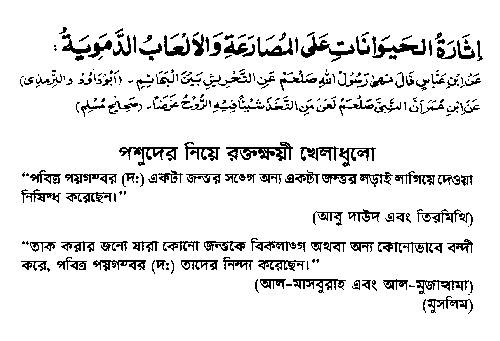
CAGING
"The Holy Prophet (S) said: 'It is a great sin for man to imprison
those animals which are in his power'." (Muslim)

VIVISECTION

(S) stands for 'Salam', meaning 'peace be upon him'.
"And cattle He has created for you (men): from them you derive
warmth, and numerous benefits, and of their by-products you eat."
Surah Mu’minoon Chapter 23 verse 21(23:21)
"And in cattle (too) you have an instructive example: from within their bodies we produce (milk) for you to drink; there are, in them, (besides), numerous (other) benefits for you; and of their (by products) you eat;"
Surah Hajj chapter 22 verse 37(22:37)
"It is not their meat nor their blood that reaches Allââh ,it is your piety that reaches him: He has thus made them subject to you, that you may glorify Allââh for his guidance to you: and proclaim the good news to all who do right"
Understanding that you become what you eat, Islam Prohibits the eating of carnivorous animals like lion, tiger, leopard, etc. The consumption of the meat of such animals would probably make a person violent and ferocious. Therefore where Islam does condone as a concession to eat meat Islam only allows the eating of herbivorous animals like cow, goat, sheep, etc. that are peaceful and docile.
The glorious Qur’ân says in Surah A`raaf Chapter 7 Verse 157(7:157)
"Those who follow in the Messenger, the unlettered Prophet (PBUH), whom they find mentioned on their own (Scriptures), in the law and the Gospel - for he commands them what is just and forbids them What is evil; he allows them as lawful what is good (and pure) and prohibits them from what is bad (and impure); He releases them from their heavy burdens and from the yokes that are upon them. So it is those who believe in him, honour him, help him, and follow the Light which is sent down with him it is they who will prosper."
And in Surah Hashr Chapter 59 Verse 7(59:7)
"What Allah has bestowed on His Messenger (and taken away) from the people of the townships belongs to Allah, to His Messenger and to kindred and orphans, the needy and the wayfarer; In order that it may not (merely) make a circuit between the wealthy among you. So take what the Messenger assigns to you, and deny yourselves that which he withholds from you. And fear Allah; for Allah Is strict in Punishment."
Ahaadeeth Of Muhammad (Pbuh) prohibiting eating of carnivorous animals
According to a Ahaadeeth narrated by lbn Abbaas in Saheeh Bukhari and Saheeh Muslim the Holy Prophet (PBUH) prohibited the eating of
i. Wild animals with canine teeth i.e. meat eating carnivorous animals. These are animals belonging to the cat families such as lion, tiger, cats, dogs, wolfs hyenas, etc
ii. Certain rodents like mice, rats, rabbits with claws, etc.
iii. Certain reptiles like Snakes, alligators etc.
iv. Birds preying with talons or claws, like vultures, eagles, crows, owl, etc;
Thus for some Muslims, The Prophet’s (PBUH) statement is sufficient to convince him that Allah does not wish humans to eat meat, while some other Muslims suggest that he means that some kinds of meat are prohibited while allowing some other kinds.
It is an established medical fact that eating meat of dead animals is detrimental to human beings. Besides causing diseases like Anthrax bacillus. Brucellosis, parteurella multocida, hemorihagic septicunia, flesh of dead animals causes heptospirosis which can even cause death. The Glorious Qur’ân prohibits dead meat in no Less than 4 places.
In Surah Baqarah chapter 2 verse 173 (2:173)
In surah Ma’idah chapter 5 verse 8 (5:8)
In Surah A’naam chapter 6 verse 145 (6: 145)
In Surah Nahl chapter 16 verse 115 (16:115)
Islam's concession for meat eating:
Allah says in Surah Al- Baqarah Chapter no.2 verse no.173 (2:173)
"He has only forbidden you, dead meat, and blood, and the flesh of swine, and that on which any other name has been invoked besides that of Allah.”
In Surah Al-Ma'idah Chapter no.5 verse 3(5:3)
“Forbidden to you (for food) are: dead meat, blood, the flesh of swine, and that on which has been invoked the name of other than Allah: That which has been killed by strangling, or by a violent blow or by a headlong fall, or by being gored to death; That which has been (partly) eaten by a wild animal; Unless you are able to slaughter it (in due form), that which is sacrificed on stone (altars); (Forbidden) also is the division (of meat) by raffling with arrows: that is impiety. This day have those who reject faith given up all hope of your religion: yet fear them not but fear Me. This day have I Perfected your religion for you, completed My favour upon you, and have chosen for you Islam as your religion. But if any is forced by hunger, with no inclination to transgression, Allah is indeed Oft-Forgiving Most Merciful.”
In Surah Nahl Chapter no.76 verse 115 (16:115)
“He has only forbidden you dead meat and blood, and the flesh of swine,
and any (food) over which the name of other than Allah has been invoked.
But if one is forced by necessity, without willful disobedience, nor transgressing
due limits - then Allah is Oft-Forgiving, Most Merciful."
It is not necessary to sacrifice animals in the Hajj. When I did my Hajj, I did it the Maliki way. According to Maliki fiqh, ifrad is the most preferred format. With ifrad, there is no animal sacrifice. I completed a pilgrimage that was perfectly valid according to Maliki fiqh — and no animals were harmed in the making of my Hajj.
Vegetarianism is halal.
Meat is not compulsory.
Any food is permissible provided it is not harmful.
Muslims are free to eat whatever they want provided it
is halal.
See more Islamic vegetarian links here:
http://www.islamveg.com/
The place for vegetarians in Egypt.
http://www.vegetarianegypt.com/index.pl/volume_one
The option to be vegetarian has always existed in Islam, whether or not it was actualized at any time or place. The great Sufi Râbi‘ah al-‘Adawîyah of Basrah was an early Muslim vegetarian; so were the famous poet Abû al-‘Alâ’ al-Ma‘arrî and the Ottoman sultan Bayezid II. In recent times, the renowned Sufi shaykh Bawa Muhaiyaddeen was a notable vegetarian Muslim. Nowadays there are more and more Muslims in different countries choosing to be vegetarian, although they have mostly kept quiet about it.
Sometimes we get negative, hostile, indignant, or incredulous reactions from other Muslims who have never considered the possibility. One common line of attack goes, "You can't make harâm what Allah has made halâl! That is a sin!" Excuse me, but who ever said anything about making anything harâm? Why even bring that issue into it? Why do they have to think of everything in life in terms of force and compulsion and forbidding? In Islamic law there are more categories than just obligatory and harâm. There are various shadings of desirable and undesirable, and in the middle there is the neutral (al-mubâh). The choice of what halâl food to eat is a neutral one—-it doesn't have any direct bearing on what is forbidden or obligatory. I'm not making meat "harâm." I just don't wish for any, thank you.
Some Muslims will tell you that in Islamic law you are not allowed to refuse to eat meat. This is mere opinion unsupported by any evidence from the sources of the Sharî‘ah. Suppose they establish the "Islamic State," then how will they enforce this ruling? Hold me down, force my mouth open, and shove kebabs down my throat? Come on, I don't think so.
Others try to persuade you by saying that the Prophet, peace be upon him, ate meat, so you should too. Well, let's look closer at that argument. We all know that we should try to emulate the Prophet's sunnah. And what is more important in the Sunnah: to observe specific details of the Prophet's personal taste which others may or may not share? Or to abide by the great universal principles of behavior and character that he exemplified?
The Prophet recognized that each person is a unique autonomous individual with his or her own personality. When giving advice to individual Companions, he would specifically tailor the advice according to that person's own characteristics. He did not enforce any overbearing uniformity on the people. Especially when it came to eating, he recognized that different people have different tastes. And for that matter, not even the Prophet and his Companions ate meat all the time; it was only once in a while that they did, not every day. Some Muslims seem to be under the impression that eating meat is the sixth pillar of Islam or something, but clearly there is no reason for thinking so.
The one overall guideline on food that the Prophet gave was: Eat of what is halâl and what is agreeable to you. That says it all. Within the wide range of halâl food, each individual can choose to eat whatever suits him or her.
If people want to follow the Prophet's sunnah of eating, consider this: The Prophet ate what he liked and he left aside what he didn't like. That's all we vegetarians are doing! Furthermore, he never coerced anyone else into eating what they didn't like. How about imitating this sunnah?
There was a Bedouin tribe whose custom it was to eat lizards, and the Prophet never forbade them from doing so. But he himself would never eat a lizard. This shows that just because something is "halâl," that doesn't require you to eat it if you don't want to.
The bottom line is: no one has the authority to dictate to you what halâl food you can choose to put into your body. Islamic law is completely neutral on this issue; it is only a private matter for each individual to decide for his or her self.
Moreover, note that the Qur’ân does not simply say to eat halâl meat: it says to eat what is good and wholesome (tayyib), and what is halâl. Therefore, if any food is not tayyib, the Qur’ân does not encourage us to eat it. Most of the microbes that reside in the gut of a cow and find their way into our food get killed off by the acids in our stomachs, since they originally adapted to live in a neutral-pH environment. But the digestive tract of the modern feedlot cow is closer in acidity to our own, and in this new, manmade environment acid-resistant strains of E. coli have developed that can survive our stomach acids — and go on to kill us. By acidifying a cow's gut with corn, we have broken down one of our food chain's barriers to infection. Considering the diseases linked with meat eating (hardening of the arteries, which causes circulatory failure and stroke, in addition to other ills; gout; E. coli infection; and Mad Cow Disease), the hormones artificially put into animals, the filthy conditions of feedlots and slaughterhouses, and the danger of meat going bad, I can only conclude that meat does not pass the test of being tayyib, so Muslims are better off without it.
Ever since I became vegetarian, I feel lighter, fresher, happier, healthier. I can think better. Now, who will argue with that? :-)
nindasi yajna-vidher ahaha sruti-jatam
sadaya-hrdaya darsita-pasu-ghatam
kesava dhrta-buddha-sarira
jaya jagadisa hare
(9) O Keshava! O Lord of the universe! O Lord Hari, who
have assumed the form of Buddha! All glories to You! O Buddha of compassionate
heart, you decry the slaughtering of poor animals performed according to
the rules of Vedic sacrifice.
(Jayadev Goswami. Dasavatara Stotram 9.)
Lord Buddha taught that this material world is full of
suffering, and he also taught that there is 'samudaya' or a cause (material),
and that due to there being a cause there must be a way of removing the
cause, so then one has to remove material existence. This is the teaching
of Buddha and as far as I can see there is nothing wrong with this statement,
as with many of the revealed statements of Buddha. Though he never really
disclosed more than this. Still He had a function to perform and he did
it well. It was not His purpose really to develop anything further, nor
would the people of the time had been able to receive any more than this,
it was a troubled time.
Throughout Buddha's life he always acted in an
exemplary way, His compassion was always very personal, despite his missions
philosophy. In his life history there are many incidences recorded in which
some details to his mission are brought out, but mostly the focus has been
on His path of refutation of the deviant so-called Vedantists. However
we have found one rare written poem reputed to be the only text actually
written by the renounced Buddha :
Creatures without feet my love ,
and likewise those who have two feet ;
and those, too who have many feet.
Let creatures all, all things that live,
all beings of whatever kind, see
nothing that will bode them ill.
May no evil come to them.
There in the Buddhist scripture Surangama sutra He is quoted as saying that, "The reason for developing detachment, performing meditation, and seeking enlightenment is to escape from the sufferings of life. But in seeking that escape ourselves why should we impose suffering upon others. So unless one can control the mind then the misdeeds of violence and brutal unkindness and killing will be prevalent, when one is abhorrent to such acts nurturing compassion to all who are naturally suffering, then one can escape from the bondage of mundane life."
This was the conclusion of Lord Buddha sitting for six years under the banyan ('Bodhi') tree performing austerity and meditation on the outskirts of the city of Gaya in Northern India.
It is even mentioned that Catur Mukha Lord Brahma the
teacher of the sacred Vedas throughout the universe came, and hailed "The
Buddha", and requested him to preach to save the fallen souls in this world,
let them over come birth, death, old age and disease. Lord Buddhas' reply
was, "That the door to the realm of the immortals is now wide open to all
those who hear me."
Lord Buddha himself in a hidden manner reveals
Himself as the Personality of Godhead, but by default, in the Donasutta
saying, "I am not a 'Deva', (demigod ), I am not a 'Gandharva' (celestial
angel), nor 'Yaksa' (fierce guardian spirit), or human being." And in the
Saddharma Punarika He announces to all :-
yam eva'ham lokapita swayambhu cikitsakah sarvaprajnan natah
"I am the self born, Father of all, the Lord of all beings
and the remover of all ills."
Vegetarianism in Buddhism
http://www.hsuyun.com/vegetarian.html
Surangama Sutra (Mahayana)
In the Chapter entitled "The enlightenment of others" and the section Prohibition against Killing, page 154. The Buddha said:
"If a man can (control) his body and mind and thereby refrains from eating animal flesh and wearing animal products, I say he will really be liberated."
Also from the Surangama Sutra:
"The reason for practicing dhyana and seeking to attain Samadhi is to escape from the suffering of life, but in seeking to escape from the suffering ourselves why should we inflict it upon others? Unless you can so control your minds that even the thought of brutal unkindness and killing is abhorrent, you will never be able to escape from the bondage of the world’s life…After my Parinirvana in the last kalpa different kinds of ghosts will be encountered everywhere deceiving people and teaching them that they can eat meat and still attain enlightenment… How can a bhikshu, who hopes to become a deliverer of others, himself be living on the flesh of other sentient beings?"
Brahmajala Sutra, (What the Teaching is Not), from the Pali Canon; "Long Discourses of the Buddha", Sutta 1: Translation by Maurice Walshe pages 69 and 70.
"Whereas some ascetics and Brahmins, feeding on the food of the faithful, remain addicted to the enjoyment of stored-up goods such as food, drink, clothing, carriages, beds, perfumes and meat, the ascetic Gotama refrains from such enjoyment."
Lankavatara Sutra (Mahayana) translated from Sanskrit by D. T. Suzuki. This Sutra was a discussion of the fundamental concepts of Mahayana Buddhism. Chapter Eight is entirely devoted to the prohibition of meat eating.
"The Blessed One said this to him: For innumerable reasons, Mahamati, the Boddhisattva, whose nature is compassion, is not to eat any meat."
"Now, Mahamati, the food I have permitted (my disciples to take) is gratifying to all wise people but is avoided by the unwise; it is productive of many merits, it keeps away many evils; and it has been prescribed by the ancient Rishis. It comprises rice, barley, wheat, kidney beans, beans, lentils, etc., clarified butter, oil, honey, molasses, treacle, sugar cane, coarse sugar, etc.; food prepared with these is proper food."
"If, Mahamati, meat is not eaten by anybody for any reason, there will be no destroyer of life. Mahamati, in the majority of cases the slaughtering of innocent living beings is done for pride and very rarely for other causes."
"It is not true, Mahamati, that meat is proper food and permissible for the Sravaka ( a hearer, hence a pupil or beginner) when (the victim) was not killed by himself, when he did not order others to kill it. When it was not specially meant for him."
Scripture of Brahma’s Net translated from the Chinese by Rev. Hubert Nearman with Rev. Master Jiyu-Kennett and Rev. Daizui MacPhillamy as consultants and editors. Page 138.
Third Less Grave Precept:
On eating meat.
"Disciples of the Buddha, should you willingly and knowingly eat flesh, you defile yourself by acting contrary to this less grave Precept. Pray, let us not eat any flesh or meat whatsoever coming from living beings."
mohanartham danavanam balarupi pathisthitah
putram tam kalpayamasa mudhabuddhih
jinah svayam:
tatah sammohayamasajinadyan asurantakan
bhagavan vaghirygrabhina himsavacibhihhaririti:
Brahmande:
In the Bhaktivedanta purports to this Srimad Bhagavatam (1:3:24.) verse, Srila Prabhupada, in brief, portrays Lord Buddha. "Lord Buddha, a powerful incarnation of the Personality of Godhead, appeared in the province of Gaya (Bihar) as the son of Anjana, and He preached His own conception of non-violence and deprecated even the animal sacrifices sanctioned in the Vedas. At the time when Lord Buddha appeared, the people in general were atheistic and preferred animal flesh to anything else. On the plea of Vedic sacrifice, every place was practically turned into a slaughterhouse, and animal-killing was indulged in unrestrictedly. Lord Buddha preached non-violence, taking pity on the poor animals. He preached that He did not believe in the tenets of the Vedas and stressed the adverse psychological effects incurred by animal killing. Less intelligent men of the age of Kali, who had no faith in God, followed His principle, and for the time being they were trained in moral discipline and non-violence - the preliminary steps for proceeding further on the path of God realisation. He deluded the atheists because such atheists who followed his principles did not believe in God but they kept their absolute faith in Lord Buddha, who himself was in incarnation of God. Thus the faithless people were made to believe in God in the form of Lord Buddha. That was the mercy of Lord Buddha; he made the faithless faithful to him.
"Killing of animals before the advent of Lord Buddha was
the most prominent feature of society. People claimed that these were Vedic
sacrifices. When the Vedas are not accepted through the authoritative disciplic
succession, the casual readers of the Vedas are misled by the flowery language
of that system of knowledge. In the Bhagavad Gita, a comment has been made
on such foolish scholars ('avipascitah'). The foolish scholars of Vedic
knowledge who do not care to receive the transcendental message through
the transcendental realised sources of disciplic succession are sure to
be bewildered. To them, the ritualistic ceremonies are considered to be
all in all. They have no depth of knowledge. According to the Bhagavad
Gita (15:15.): 'vedais ca sarvair aham eva vedyah' - the whole system of
the Vedas is to lead one gradually to the path of the Supreme Lord. The
whole theme of Vedic literature is to know the Supreme Lord, the individual
soul, the cosmic situation and the relation between all these items. When
the relation is known, the relative function begins, and as a result of
such function the ultimate goal of life or going back to Godhead takes
place in the easiest manner. Unfortunately, unauthorised scholars of the
Vedas become captivated by the purificatory ceremonies only, and the natural
progress is thereby checked."
"To such bewildered persons of atheistic propensity,
Lord Buddha is the emblem of theism. He therefore first of all wanted to
check the habit of animal-killing. The animal killers are dangerous elements
on the path going back to Godhead. There are two types of animal killers.
The soul is also sometimes called the 'animal' or the living being. Therefore,
both the slaughterer of animals and those who have lost their identity
of soul are animal-killers. Maharaja Pariksit said that only the animal-killer
cannot relish the transcendental message of the Supreme Lord. Therefore
if people are to be educated to the path of Godhead, they must be taught
first and foremost to stop the process of animal killing as above mentioned.
It is nonsensical to say that animal-killing has nothing to do with spiritual
realisation. By the dangerous theory many so-called 'sannyasis' have sprung
up by the grace of 'Kali-yuga' who preach animal killing under the garb
of the Vedas. The subject matter has already been discussed in the conversation
between Lord Caitanya and Maulana Chand Kazi Shaheb. The animal sacrifice
as stated in the Vedas is different from the unrestricted animal killing
in the slaughterhouse. Because the asuras or the so-called scholars or
Vedic literatures put forward the evidence of animal-killing in the Vedas,
Lord Buddha superficially denied the authority of the Vedas. This rejection
of the Vedas by Lord Buddha was adopted in order to save people from the
vice of animal-killing as well as to save poor animals from the slaughtering
process of their big brothers who clamour for universal brotherhood, peace,
justice and equality . There is no justice when there is animal-killing.
Lord Buddha wanted to stop it completely, and therefore his cult of 'ahimsa'
(non-violence) was propagated not only in India but also outside the country."
"Technically Lord Buddha's philosophy is called
atheistic because there is no acceptance of the Supreme Lord because that
system of philosophy denied the authority of the Vedas. But that is an
act of camouflage by the Lord. Lord Buddha is the incarnation of Godhead
and as such, He is the original propounder of Vedic knowledge. He therefore
cannot reject Vedic philosophy, but He rejected it outwardly because the
'sura-dvisa', or the demons who are always envious of the devotees of Godhead,
try to support cow-killing or animal-killing from the pages of the Vedas,
and this is now being done by the modernised 'sannyasis'. Lord Buddha had
to reject the authority of the Vedas altogether. This is simply technical,
and had it not been so He would not have been so accepted as the incarnation
of Godhead, nor would He have been worshiped in the transcendental songs
of the poet Jayadeva, who is a 'Vaisnava acarya'. Lord Buddha preached
the preliminary principles of the Vedas in a manner suitable for the time
being (and so also did Sankaracarya) to establish the authority of the
Vedas. Therefore both Lord Buddha and Acarya Sankara paved the path of
theism, and 'Vaisnava acaryas', specifically Lord Sri Caitanya Mahaprabhu,
led the people on the path towards a realisation of going back home, back
to Godhead.
"We are glad that people are taking interest in
the non-violent movement of Lord Buddha, but will they take the matter
very seriously and close the animal slaughterhouses altogether? If not,
there is no meaning to the ahimsa cult."(A.C.Bhaktivedanta Swami Prabhupada.
Srimad Bhagavatam 1:3:24. purport.)
A Buddhist Perspective on Vegetarianism
http://www.ivu.org/religion/articles/buddhist.html
Why is it that many Jewish religious leaders advocate vegetarianism, including the late Chief Rabbi of Israel Shlomo Goren and the first Chief Rabbi of pre-state Israel Abraham Kook?
Why is it that the former Chief Rabbi of Ireland David Rosen considers "the consumption of meat as halachically unacceptable"?
Why is it that, after India, Israel has the largest number
of faith-based vegetarians in the world?
http://www.jewishveg.com/
The Torah is full of commandments demanding humane treatment of animals, yet the modern factory farms that produce over 90% of the animal products we consume today raise their animals in unconscionable conditions of abject misery. The Torah reflects great concern for the land, yet as the primary cause of water pollution, water use, topsoil erosion, destruction of the world's rainforest, and other environmental harms, animal agriculture takes a devastating toll on the planet. Jewish teachings emphasize the grave importance of protecting human health, yet the consumption of animal products in the United States is responsible for numerous diseases including heart disease, America's number one killer. Judaism places great concern on providing for the poor and the hungry, yet while 800 million people do not have enough food to sustain themselves, our carnivorous diets are at least ten times as wasteful of food resources as a vegetarian one.
Please read and learn about the growing Jewish vegetarian movement, and think about how Jewish teachings relate to decisions we make everyday as we sit down to eat. As Rabbi Isaac ha-Levi Herzog said, "Jews will move increasingly to vegetarianism out of their own deepening knowledge of what their tradition commands... A whole galaxy of central rabbinic and spiritual leaders...has been affirming vegetarianism as the ultimate meaning of Jewish moral teaching."
Jews believe that before the coming of the Messiah, man must demonstrate the utmost regard for all animals - as first seen in Eden. Therefore, vegetarianism is a Judaic ideal, and keeping kosher is a compromise between this ideal and the reality of life on Earth. The rules for keeping kosher are very complex; I have tried to summarize them here without losing site of the main point.
The Jewish Vegetarian Ideal
Jewish vegetarianism is a philosophy and lifestyle, based upon Jewish teachings and mandates, that prescribes a diet centered on grains, vegetables, fruits, nuts, and seeds and that proscribes the consumption of all animal flesh, including that of fish and fowl. Many well known Jews have followed a Jewish vegetarian lifestyle. Rabbi Abraham Isaac Hakohen Kook, the first chief rabbi of modern Israel, considered vegetarianism to be the ideal, the ultimate peace between mankind and the rest of the animal kingdom. He felt that in the Messianic Age, as prophesied by Isaiah (XI:7), we would all be vegetarian again and the only sacrifices offered would be the mincha sacrifice, which was of vegetable origin. Although there is some debate regarding Rav Kook's consistency in following a vegetarian diet, Rabbi She'ar Yashuv Cohen, the current Chief Rabbi of Haifa, has written, "I myself, am a vegetarian, following in the footsteps of my late father, the saintly Nazir of Jerusalem [Rabbi David Cohen], and his teacher, the saintly first Chief Rabbi of Israel, Rabbi Avraham Isaac Hacohen Kook." Other well known Jewish vegetarians include Rabbi David Rosen, former Chief Rabbi of Ireland, the late Rabbi Shlomo Goren z"l, Chief Rabbi of Israel, and Avraham Burg (vegan - strict vegetarian), the youngest and only religious person ever to be elected Knesset Speaker, whose diet reflects his respect for the sanctity of all life. Thus, Jewish vegetarianism has had many prominent adherents.
In the ideal state of Gan Eden (the Garden of Eden), mankind is described as being vegetarian, and this state persisted until after the Flood in the time of Noach. In Bereishit, perek aleph, pasuk kaf"tet (Genesis I:29), God told Adam and Chava (Eve) that He had given them all of the seed-bearing plants and fruits as food. The Gemara (Sanhedrin 59b) declares, "Rav Yehuda said in the name of Rav, 'Adam was not allowed to eat meat,'" citing the above pasuk (verse) from Bereishit. Almost all of the subsequent commentators agree with this assessment.
Vegetarianism can be considered the ideal from several perspectives. We will consider each of these in turn.
Health and Prevention
A plant-based diet is the ideal, as confirmed by medical scientists in recent years. A commentator has suggested that the prescription of a vegetarian diet in Gan Eden could not have been for health reasons because there are many poisonous plants that would be harmful if consumed. This objection does not make much sense, however. If a doctor tells a patient to eat more fruits and vegetables, he is giving a general recommendation for health reasons. Although there are some poisonous berries and plants, he assumes that the patient has the common sense to stay away from them. Similarly, the prescription of this type of diet by God can be considered a general recommendation for the healthiest type of diet.
Judaism stresses the importance of maintaining health and not harming oneself. We are commanded in Devarim, perek daled, pasuk tet"vav (Deuteronomy IV:15) "venishmartem me'od lenafshoteichem" --"you shall guard yourselves most diligently." This means that we must do everything possible to guard our health and not take unnecessary risks. We are also to "choose life above all" (Deuteronomy XXX:19). The well known talmudic principle "chamira sakkanta me'issura" (Chulin 10a) indicates that a danger to health takes precedence over ritual obligations, including Shabbat observance. The Torah also declares that prevention is the highest form of healing: "If you will listen carefully to the voice of the Lord your God, and do what is right in His eyes, and keep all of His commandments, I will put none of the diseases upon you that I have put upon the Egyptians, for I am the Lord your physician." God is saying here that He is preventing disease. Since, in preventing disease, we are emulating God, prevention is the highest form of healing. With regard to vegetarianism, Rashi's midrashic explanation of this verse is very interesting: he states that God in this context is like a physician who says to a patient, "Do not eat this food or it will make you sick." Modern research has shown that there is indeed a great sakkana (danger) to health from consuming meat, and this by itself provides sufficient reason to require a vegetarian diet from a halachic (Jewish legal) perspective.
Medical Evidence Supporting a Vegetarian Diet
We have learned that nutrition is the primary determinant of health. Virtually all of our chronic diseases are linked to diet (references available on request).
Heart disease is the number one killer in the United States. Risk factors include elevated blood cholesterol levels, high blood pressure, hypercoagulability of the blood, and presence of diabetes -- all of which can be prevented or alleviated by a high fiber, low fat vegetarian diet. The Lifestyle Heart Trial showed that adoption of a low fat vegetarian diet along with exercise and stress reduction can actually reverse the hardening of the arteries that leads to heart attacks. The implication is that 95% of all heart attacks are preventable. They are not something to be expected as a consequence of aging but rather are the result of an aberrant lifestyle.
All of the major causes of death due to cancer have been linked to diet. The risk of lung cancer, number one in both men and women because of the smoking epidemic, may be increased by animal fat consumption and is reduced by vegetable consumption. Meat consumption is a major risk factor for prostate cancer, number two in men, and fats increase its aggressiveness. Breast cancer, a hormonally dependent cancer, may be linked with higher estrogen levels in women and may reflect childhood dietary practices and even the diet of one's mother prenatally. Cancer of the colon and rectum, number three in both men and women, is strongly linked to both red and white meat consumption. Meat consumption is a risk factor for pancreatic cancer (number four in both men and women), whereas legumes and dried fruits appear to be protective. Ovarian cancer, number five in women, has been linked with dairy (including skim milk), egg, and meat consumption. Lymphoma, number five in men and six in women, has been linked with both beef and dairy consumption in various studies. And the risk of bladder cancer in non-vegetarians is twice that of vegetarians. The message is clear: we would prevent well over half of all deaths due to cancer if people increased their fruit and vegetable consumption and discarded the animal products.
The adult form of diabetes, common among overweight adults, can be prevented by a high fiber vegetarian diet. Seventh Day Adventists, about half of whom are vegetarian, have only half the death rate from diabetes as the rest of us. Vegetarian diets have also been found to lower blood pressure. Kidney stones occur in one out of every eight adults in the U.S., and meat consumption has been identified as a major risk factor. Gallstones are also much less prevalent in vegetarians. High intakes of animal protein increase the risk of osteoporosis. And obesity, which is an obvious sign of an inappropriate diet, speaks for itself.
Modern science has indeed confirmed the Torah's wisdom with regard to the ideal diet.
Ethics and Respect for Life
Judaism forbids the infliction of unnecessary pain and suffering, called tsa'ar ba'alei chayim, on nonhuman animals. This injunction is d'oreita, derived directly from the Torah. So strongly did Chazal (our Sages) feel about this matter that they included "eiver min hachai," the prohibition against removing the limb from a living animal (or more broadly, anything that causes unnecessary suffering to animals) among the seven Noachide commandments. These were the laws that they felt should be applicable to all of mankind and not just to Jews. Many of our commandments relate to the way animals should be treated.
Many traditional Jewish sources refer to nonhuman animals as creatures devoid of reasoning ability, imagination, and morality. Modern science has shown otherwise, and just as we disregard the medical remedies described by the Talmud, we should also discard these characterizations of animals because of their scientific invalidity. Anyone who has had companion animals is aware of their diverse personalities, their thinking abilities, and their capacity for unconditional love, a very positive trait. An article in the International Edition of the Jerusalem Post on August 10, 1996 described an amazing event. A British tourist was swimming in the Red Sea when he was attacked by sharks. He screamed and the water around him became stained with his own blood. As a crew in a boat sped to save him, they saw that he was being circled by three dolphins who had created a barrier between the sharks and him and had thereby saved his life.
Read the rest of this article HERE
Many more on Jewish Vegetarianism
HERE:
http://www.jewishveg.com/jv.html
Book review - Vegetarian Judaism: A Guide for
Everyone
http://www.upc-online.org/fall99/veg_judaism_review.html
By Roberta Kalechofsky, Ph.D.
Misc' Quotes
Vegetarian food leaves a deep impression on our nature.
If the whole world adopts vegetarianism, it can change the destiny of humankind."
Albert Einstein
"There is just no reason why animals should be slaughtered
to serve as human diet when there are so many substitutes. Man can live
without meat."
The Dalai Lama
"If man wants freedom why keep birds and animals in cages?
Truly man is the king of beasts, for his brutality exceeds them. We live
by the death of others. We are burial places! I have since an early age
abjured the use of meat."
Leonardo-da-Vinci
"I do feel that spiritual progress does demand at some
stage that we should cease to kill our fellow creatures for the satisfaction
of our bodily wants."
Mahatma Gandhi
"Flesh eating is unprovoked murder."
Benjamin Franklin
"Behold, a virgin shall conceive and bear a son, and shall
call his name Immanuel. He shall eat butter and honey, so that he may know
the evil from the good."
Isaiah 7:14-15
"The eating of meat extinguishes the seed of great compassion"
Buddhist - Mahaparinirvana (Mahayana Version)
The 13th Century Zen Master Doyen, while visiting China,
asked this question: "What must the mental attitude and daily activities
of a student be when he is engaged in Buddhist meditation and practice?
Ju-Ching answered that one of the
things he should avoid is eating meat.
"The salvation of birds and beasts, oneself included -
this is the object of Shakyamuni's religious austerities." Zen Master Ikkyu
"...Behold I have given you every herb bearing seed which
is upon the face of all the earth and every tree in which is the fruit
of a tree yielding seed; to you it shall be for meat..."
Genesis 1:29
"Thou shalt not kill."
Exodus 20:13
"One should treat animals such as deer, camels, asses,
monkeys, mice, snakes, birds and flies exactly like one's own son. How
little difference there actually is between children and these innocent
animals."
Srimad Bhagavatam 7.14.9
"Every act of irreverence for life, every act which neglects
life, which is indifferent to and wastes life, is a step towards the love
of death. This choice man must make at every minute. Never were the consequences
of the wrong choice as total and as irreversible as they are today. Never
was the warning of the Bible so urgent: "I have put before you life and
death, blessing and curse. Choose life, that you and your children may
live." (Deuteronomy 30:19)
Erich Fromm
"Cruelty to animals is as if man did not love God."
Cardinal John H. Newman
"Plant life instead of animal food is the keystone of
regeneration. Jesus used bread instead of flesh and wine in place of blood
at the Lord's Supper."
German Composer Richard Wagner (1813)
"Man did not weave the web of life: he is merely a strand
in it. Whatever he does to the web, he does to himself. To harm the earth
is to heap contempt on its creator."
Red Indian Chief (1854)
"We pray on Sundays that we may have light/To guide our
footsteps on the path we tread;/We are sick of war, we don't want to fight,/And
yet we gorge ourselves upon the dead."
George Bernard Shaw
"If you have men who will exclude any of God's creatures
from the shelter of compassion and pity, you will have men who will deal
likewise with their fellow men."
St. Francis of Assisi
"Killing is a denial of love. To kill or to eat what another
has killed is to rejoice in cruelty. And cruelty hardens our hearts and
blinds our vision, and we are unable to see that they whom we kill are
our fellow brothers and sisters in the One Family of Creation."
G.L. Rudd, author of Why Kill For Food?
"Vegetarianism is a way of life that we should
all move toward for economic survival, physical well-being
and spiritual integrity."
Father Thomas Berry, Fordham University, New York
"The earth affords a lavish supply of riches, of innocent
foods, and offers you banquets that involve no bloodshed or slaughter;
only beasts satisfy their hunger with flesh, and not even all of those,
because horses, cattle, and sheep live on grass. As long as men massacre
animals, they will kill each other. Indeed, he who sows the seeds of murder
and pain cannot reap joy and love."
Pythagoras
"One who, while seeking happiness, oppresses with violence
other living beings who also desire happinesss, will not find happiness
hereafter."
Lord Buddha, Dhammapada, 131
"He who has renounced all violence towards all living
beings, weak or strong, who neither kills nor causes others to kill - him
I do call a holy man."
Lord Buddha, Dhammapada, 405
"Anyone familiar with the numerous accounts of the Buddha's
extraordinary compassion and reverence for living beings - for example
his insistence that his monks strain the water they drink lest they inadvertently
cause the death of any micro-organisms - could never believe that he would
be indifferent to the sufferings of domestic animals caused by their slaughter
of food"
Roshi Philip Kapleau, 'To Cherish All Life'
"The inhabitants are numerous and happy... Throuhout the
country the people do not kill any living creature, nor drink intoxicating
liquor, they do not keep pigs and fowl, and do not sell live cattle; in
the markets there are no butcher shops and no dealers in intoxicating drink...
Only the Chandalas (lowest cast) are fisherman and hunters and sell flesh
meat."
Famous 4th century Chinese Buddhist traveller Fa-hsien,
travelling in India
"I have enforced the laws against killing certain animals
and many others. But the greatest progress of Righteousness among men comes
from the exhortation in favour of non-injury to life and abstention from
killing living things. "
Pillar Edict of King Ashoka (268-233 BC)
"To be non-violent to human beings and to be a killer
or enemy of poor animals is Satan's philosophy. In this age there is always
enmity against animals, and therefore the poor creatures are always anxious.
The reaction of the poor animals is being forced on human society, and
therefore there is always the strain of cold or hot war between men, individually,
collectively or nationally..."
His Divine Grace A.C. Bhaktivedanta Swami Prabhupada
"For my part I rather wonder both by what accident and in what state of mind the first man touched his mouth to gore and brought his lips to the flesh of a dead creature, set forth tables of dead, stale bodies, and ventured to call food and nourishment the parts that had a little before bellowed and cried, moved and lived. How could his eyes endure the slaughter when throats were slit and hides flayed and limbs torn from limb? How could his nose endure the stench?
How was it that the pollution did not turn away his taste,
which made contact with sores of others and sucked juices and serums from
mortal wounds? It is certainly not lions or wolves that we eat out of self-defense;
on the contrary, we ignore these and slaughter harmless, tame creatures
without stings or teeth to harm us. For the sake of a little flesh we deprive
them of sun, of light, of the duration of life to which they are entitled
by birth and being."
Plutarch in his essay 'On Eating Flesh'
"If you declare that you are naturally designed for such
a diet, then first kill for yourself what you want to eat. Do it, however,
only through your own resources, unaided by cleaver or cudgel or any kind
of ax."
Plutarch
"The steam of meat darkens the light of the spirit...One
hardly can have virtue when one enjoys meat meals and feasts..."
St. Basil (AD 320 - 79)
"I am full of the burnt offering of rams and the fat of
fed beasts. I delight not in the blood of bullocks, or of lambs, or of
goats...Bring no more vain offerings... When you spread forth your hands,
I will hide mine eyes though you make many prayers, and I will not hear
you. For your hands are full of blood..."
Isaiah 1:11-15
"...Therefore the Lord will give you meat and you shall
eat. You shall not eat one day or two days, or ten days or twenty days,
but till it comes out at your nostrils and becomes loathsome to you, because
you have rejected the Lord..."
Numbers 11:18-20
"...He who gives permission, he who kills the animal,
he who sells the slaughtered animal, he who cooks the animal, he who administers
the distribution of the flesh, and at last he who eats the flesh are all
murderers and all of them are punishable under the law of karma."
The Laws of Manu (5:55)
"Meat can never be obtained without injury to living creatures,
and injury to sentient beings is detrimental to the attainment of heavenly
bliss; let him therefore shun the use of meat."
The Laws of Manu
"Having well considered the disgusting origin of flesh
and the cruelty of fettering and slaying of corporeal beings, let him entirely
abstain from eating flesh."
The Laws of Manu
"Those who never harm others by (physical deeds), by thought
and speech, in whatever condition they may be, do not go to Yama's abode.
Men who harm other creatures do not go to heaven, in spite of their reciting
Vedas, giving gifts, practicing austerities or performing sacrifices. Harmlessness
is a great form of piety. Harmlessness alone is a great penance. Harmlessness
is a great gift. This what the sages say."
Padma Purana III 31-25-28
"...Ethics has not only to do with mankind but with the
animal creation as well. This is witnessed in the purpose of St. Francis
of Assisi. Thus we shall arrive that ethics is reverence for all life.
This is the ethic of love widened universally. It is the ethic of Jesus
now recognized as a necessity of thought...Only a universal ethic which
embraces every living creature can put us in touch with the universe and
the will which is there manifest..."
Albert Schweitzer
"There is not an animal on the earth, nor a flying creature
flying on two
wings, but they are peoples like unto you."
Koran, surah 6 verse 38
"Flesh eating is simply immoral, as it involves the performance
of an act which is contrary to moral feeling: killing. By killing, man
suppresses in himself, unnecessarily, the highest spiritual capacity, that
of sympathy and pity towards living creatures like himself, and by violating
his own feelings becomes cruel."
Leo Tolstoy
"For the sake of love of purity, let the Bodhisattva refrain
from eating flesh, which is born of semen, blood etc. To avoid causing
terror to living beings, let the disciple, who is disciplining himself
to attain compassion, refrain from eating meat...It is not true that meat
is proper food and permissible when the animal was not killed by himself,
when he did not order to kill it, when it was not especially meant for
him. There may be some people in the future who, being under the influence
of taste for meat will string together in various ways sophisticated arguments
to defend meat eating. But meat eating in any form, in any manner and in
any place is unconditionally and once and for all prohibited. "Meat eating
I have not permitted to anyone, I do not permit and will not permit..."
Lord Buddha (Lanka vatara Sutra)
"The reason for practicing dhyana and seeking to attain samadhi is to escape from the suffering of life, but in seeking to escape from suffering ourselves why should we inflict it upon others? Unless you can so control your minds that even the thought of brutal unkindness and killing is abhorred, you will never be able to escape from the bondage of the world's life...
After my paranirvana in the last kalpa different ghosts
will be encountered everywhere deceiving people and teaching them that
they can eat meat and still attain enlightenment...How can a bhikshu, who
hopes to become a deliverer of others, himself be living on the flesh of
other sentient beings?"
Lord Buddha (Surangama Sutra)
"The devotees of the Lord are released from all kinds
of sins because they eat food which is offered first for sacrifice. Others,
who prepare food for personal sense enjoyment, verily eat only sin."
Bhagavad Gita 3:13
"One who loves Krishna will give Him whatever He wants,
and he avoids offering anything which is undesirable or unasked for. Thus,
meat, fish and eggs should not be offered to Krishna...Vegetables, grains,
fruits, milk and water are the proper foods for human beings and are prescribed
by Lord Krishna Himself. Whatever else you eat, can not be offered to Him,
since He will not accept it."
His Divine Grace A.C. Bhaktivedanta Swami Prabhupada
"All tremble at Violence; all fear death. Putting oneself
in the place of another, one should not kill or cause another to kill."
Buddhist - Dhammapada 130
"He who has renounced all Violence towards all living
beings, weak or strong, who neither kills nor causes other to kill - him
do I call a holy man"
Buddhist - Dhammapada 405
"It is said about Lord Buddha sadaya-hrdaya darsita-pasu-ghatam.
He saw the whole human race going to hell by this animal killing. So he
appeared to teach ahimsa, nonviolence, being compassionate on the animals
and human beings. In the Christian religion also, it is clearly stated,
'Thou shall not kill'. So everywhere animal killing is restricted. In no
religion the unnecessary killing of animals is allowed. But nobody is caring.
The killing process is increasing, and so are the reactions. Every ten
years you will find a war. These are the reactions."
His Divine Grace A.C. Bhaktivedanta Swami Prabhupada
"We cannot separate ourselves from those whom we call
the 'lower' animals. They are lower in the scale of evolution, but they,
like us, are members of the One Family. We must not take away the life
of any creature. Indeed, we must never take away that which we cannot give.
And as we cannot restore a dead creature to life, we have no right to take
away its' life."
J.P. Vaswani , Why Kill For Food?
"Therewith He causes crops to grow for you, and the olive
and the date-palm and grapes and all kinds of fruit. Lo! Herein is indeed
a portent for people who reflect."
Koran, surah 16, verse 11
"A token unto them is the dead earth. We revive it, and
we bring forth from it grain so that they will eat thereof. And we have
placed therein gardens of the date-palm and grapes, and We have placed
therein. That they may eat of the fruit thereof, and their hands created
it not. Will they not, then, give thanks?"
Koran, surah 36, verses 33-35
"Maim not the brute beasts...Whoever is kind to the lesser
creatures is kind to himself...He who takes pity (even) on a sparrow and
spares its life. Allah will be merciful on him on the day of judgement."
Prophet Mohammed
Once someone asked George Bernard Shaw how it was that he looked so youthful. "I don't," Shaw retorted. "I look my age. It is the other people who look older than they are. What can you expect from people who eat corpses?"
Many many many more HERE


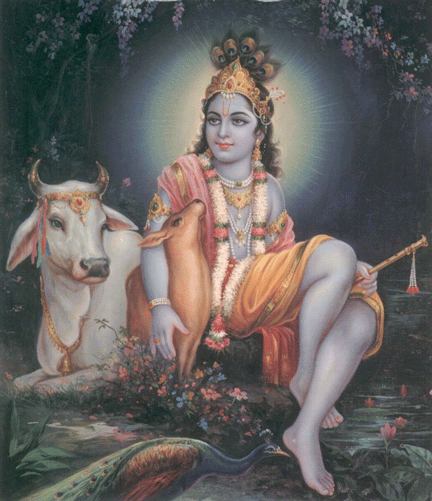

Sacred Vegetarian Recipes - Prasadam



Making Food Sacred - Offering
our food to Krishna:
....excerpt from lecture by HDG Srila A.C.
Bhaktivedanta Swami Prabhupada - Srimad-Bhagavatam 1.3.1-3 -- San Francisco,
March 28, 1968
The Vedic literature says like this, that God has no leg, no hand. Therefore the impersonalists take advantage of it. "Oh, here it is stated God has no legs, no hands." But the next line is, javana grhita: "He can accept everything which you offer Him in devotion."
Now how He can accept? If He has no hand, how He can accept things from us? That means He hasn't got a hand like us. His hand is different. Therefore even though He is situated in the spiritual world, which is far, far away from us, still, He says in the Bhagavad-gita, it is said,
patram puspam phalam toyam
yo me bhaktya prayacchati
tad aham bhakty-upahrtam
asnami prayatatmanah
Krsna says that "A little flower or little water or a little leaf, whatever My devotee offers Me in love and devotion, I accept it." And tad aham bhakty-upahrtam. "And because he has brought it with great devotion, therefore I eat." Tad aham bhakty-upahrtam asnami. Asnami means "I eat." Now you can say, "All right, I'll offer these fruits and flower to God, but it is the same. It is remaining. How He is eating?" But His eating is not like my eating, because He hasn't got a body like this. This body is material. If you bring me a plate of fruits, this body immediately swallows it. But He has got spiritual body. He eats... Simply as soon as He knows that you have offered it in devotion, He eats immediately.
Go here to follow the simple system for offering
foodstuffs to the Lord
... and always
with the Magic ingredient - Offer it to Krishna.....
... with L'n D (love and devotion)
http://www.hknet.org.nz/How2offer.htm
Why do we offer our food to God before eating?
http://www.bhojan.org/dynamic/modules.php?name=Content&pa=showpage&pid=11
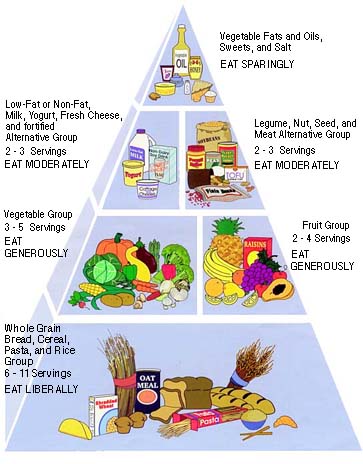
Download
your FREE EGGLESS Cake Recipe Cookbook
- with 100 EGGLESS recipes
http://www.hknet.org.nz/great100.zip
EgglessDotCom - A site for vegetarian baking
without eggs.
http://www.eggless.com/
NEW EKADASI RECIPES:
http://www.hknet.org.nz/ekadasi-page.htm
Ekadasi Book Cooking - new book coming:
http://www.webcom.com/~ara/iwr/14.1/books/ekadasi.shtml
Ekadasi Recipes - preps without grains or beans
etc:
http://www.geocities.com/Tokyo/Courtyard/8761/f15.htm
Vrata ka khaana - Fast Foods cook book 4 sale
(all ekadasi preps - some samples here):
http://www.niruskitchen.com/books/book_vrat.htm
Fast Food of a Different Kind:
http://www.lifepositive.com/body/holistic-recipes/recipes/food-fast.asp
Non-vegetarian aditives and non-ekadasi food
aditives list:
http://home.iprimus.com.au/naractl/Non-Vegetarian_Food_Additives_for_Australia.htm

Meat Free Zone:
http://www.all-creatures.org/mfz/mfz-free.html
A Guide to Gourmet Vegetarian Cooking and a
Karma-Free Diet:
http://www.mediarama.it/sanga/html/recipes.htm
FIRST~CLASS PRASADAM - A COLLECTION OF RECIPES
& INSTRUCTIONS
http://www.harekrsna.com/science/taste/prasadam/recipes.htm
 VEGETARIAN CHEESES
- NO ANIMAL RENNET only VEGE
RENNIN
VEGETARIAN CHEESES
- NO ANIMAL RENNET only VEGE
RENNIN
(even Parmesan and other favorites)
Not just cheeses also vegetarian yogurts and other dairy produce.
Tararua Lite Sour Cream for Vegetarians hits the shelves Sept 1st 2004.
(we bought some Stilton, Parmesan, Edam, Swiss and a few others - LOL
- you have to check out these pages and then go to your Woolworths, Countdown,
Foodtown, Pak'nSav, New World or local Deli.....believe me it's worth it,
especially the Tuxford range; Cheshire, Red Leicester, Double Gloucester,
Wensleydale varieties from the UK =>:-)))
http://www.hknet.org.nz/vege-cheese.html
updated to help you
6th Sept 2004
All the Meatless Pasta preparations
you'd like to prepare:
http://www.ilovepasta.org/recipes/meatless.html
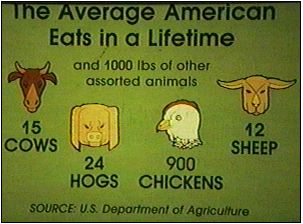
The Meatrix -
this you have to see to believe - take the red pill see reality - The Meatrix
it's all around you:
http://www.peta.org/feat/meatrix/

Allow the Meatrix to download fully before attempting to observe.............
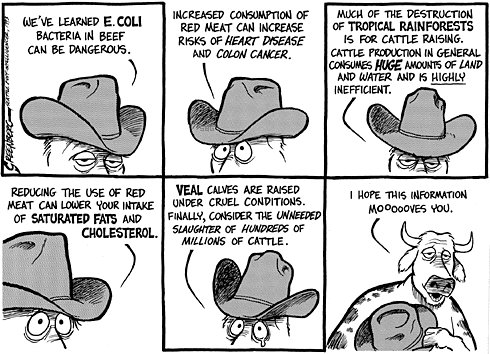

http://www.hknet.org.nz/Calendar-glossary.htm#Chaturmasya
Scrambled Curd - Great Vegetarian Dishes by Kurma dasa
This is the vegetarian counterpart to scrambled eggs. Fresh curd cheese
(panir) is scrambled with sour cream and sprinkled with black salt (which
has a distinct sulphur-like flavour), spices, and fresh herbs to produce
a stunning result. Serve at breakfast with hot gradually add the lemon
juice and toast or Puffed Fried Breads (Pooris), and Tomato Chutney.
PREPARATION AND COOKING TIME: 40 - 50 minutes
YIELD: enough for 4 - 6 persons
Ingredients:
6 litres (101/2 pints) full-cream milk
7 tablespoons (140 ml) lemon juice
2 tablespoons (40 ml) ghee or butter
1/2 teaspoon (2 ml) yellow asafoetida powder
1/2 teaspoon (1 ml) turmeric
1/2 teaspoon (2 ml) sweet paprika
1 teaspoon (5 ml) salt
1/4 teaspoon (1 ml) coarsely ground black pepper
3/4 cup (185 ml) cream or sour cream
2 tablespoons (40 ml) coarsely chopped fresh
coriander leaves
1 teaspoon (5 ml) Indian black salt (kale namak),
finely ground
1. Boil the milk in a heavy-based 8 - 10 litre/quart saucepan, stirring
constantly. When the foam rises, gradually add the lemon juice and reduce
the heat to low. Stir very slowly until the solid curd cheese separates
from the yellowish whey. (If separation does not occur after 1 minute,
add a little more lemon juice.
2. Pour the curds and whey into a colander lined with a triple-thickness
of cheesecloth. Press under a heavy weight for 10 to 15 minutes.
3. Unwrap the curd cheese and break it into 21/2 cm (1-inch) chunks.
4. Heat the ghee or butter in a large pan or wok over moderate heat.
Saute the asafoetida and turmeric in the hot ghee. Add the pieces of curd
cheese and stir gently until the turmeric-coloured ghee is well distributed.
Increase the heat and add the paprika, salt, and pepper. When the curd
cheese is well mixed, remove from the heat.
5. Add the cream or sour cream and the black salt, stirring carefully.
Add the fresh herbs, mix well, and serve hot.

Spinach Fry
Ingredients:
1 bunch spinach, finely chopped
1 tbsp oil
1 tsp mustard seeds
1 tsp cumin seeds
1 tbsp Bengal gram
1 tsp ginger paste
2-3 crushed red chilies
1/4 tsp turmeric
1-2 sprigs of curry leaves
1 tsp Hing
Salt to taste
Method:
Heat oil in a pan and fry the mustard and cumin seeds until they pop.
Add Bengal gram, red chilies, curry leaves and fry for 2 minutes.
Also add ginger paste and Hing and fry for 2 more minutes.
Now add chopped spinach, salt and fry until it is done.
Serve hot with rice or chapathi.
Serves 4
Roasted Veggies
Ingredients:
3 med. potatoes
2 large carrots
1 red pepper (or any color)
1 cup broccoli
1 cup spinach chopped
Dice all veggies into 1/2 inch cubes in a bowl
and combine:
1 tbsp lemon juice
1 tsp salt (more or less to taste)
1 tsp fresh ground black pepper
1/4 tsp cayenne pepper
1 tbsp oregano
1 tbsp basil
1 tsp hing powder
1/4 cup olive oil
1 tsp thyme or rosemary or both
Method
Mix well.
Preheat oven 350 degrees
Grease baking pan (needs to have depth so juices gather) combine veggies
into baking dish. Then combine all the spices and lemon juice, olive oil,
salt etc., together, and pour liquid spice mix over veggies and mix well.
Cook covered for 50 min, stirring once. Increase oven temp to 425 degrees
and uncover pan.
Bake for 30 min, stirring once, or until soft and brown.
Tip: Add any veggies you think are good.
You can even melt cheese over the top........
Offer & serve hot
GAURANGA (GOLDEN) POTATOES
This recipe is from “Great Vegetarian Dishes from Around the World.”
by Kurma dasa
Ingredients:
8 med. potatoes, peeled and sliced thin
1 Tbsp. olive oil
¾ tsp. yellow asafetida powder (hing)
½ tsp. ground dried rosemary (more is
good too)
¼ tsp. freshly ground black pepper
½ tsp. turmeric
3 Cups. vege sour cream (3 Cups yogurt)
1 Tbsp. melted butter
2 tsp. salt
½ C. water
1 tsp. sweet paprika
2 Tbsp. fresh parsley, chopped
Method:
1. Boil the potato slices in lightly salted water in a quart sized
saucepan until they are cooked but firm. Remove and drain.
2. In a separate pot put the olive oil to a medium saucepan over moderate
heat and when hot, add the asafetida. Sauté momentarily.
3. Add the rosemary, black pepper, and turmeric and stir briefly.
4. Add the sour cream, melted butter, salt and water. Whisk it into
a smooth sauce and remove from the heat.
5. Combine potato slices and sour cream (or yogurt) mixture into a
casserole dish, sprinkle with paprika, and bake at 390 degrees for 30 minutes
or until the top is golden brown.
6. Garnish with fresh parsley and serve hot.
A variation is to bake cheese over the top once the yogurt or sour cream has permeated the entire prep dying a little.
Grilled Cheese And Vegetable Soup
A spicy and filling soup for cold days.
Cooking Time : 30 min.
Preparation Time : 20 min.
Serves/Makes : Serves 6.
Ingredients
4 large tomatoes
3/4 teacup shredded cabbage
3/4 teacup grated carrots
3 teaspoons cornflour
1 small can (225 grams) baked beans or 1/2 teacup
boiled green peas
1 chopped tomato
1 bay leaf
1/2 tsp hing
1/2 teaspoon sugar
2 tablespoons oil
salt to taste
pepper to taste
For grilling
4 tablespoons grated cheese
For the masala bag
2 sticks cinnamon
2 cloves
4 peppercorns (powdered coarsely and tied
in a piece of cloth)
Method
1. Cut the tomatoes into big pieces, add 5 teacups of water and put
to cook. When cooked, blend in a liquidiser and strain.
2. Heat the oil and fry the hing and bay leaf for 1/2 minute.
3. Add the cabbage and carrots and fry again for 1 minute. Add the
tomato soup. 4.
Mix the cornflour in a little cold water and add to the soup. 5.
Add the masala bag and salt and boil for 20 minutes. 6.
Add the beans, tomato, sugar and pepper and give one boil. 7.
Remove the masala bag and pour the soup into a big bowl. 8.
Sprinkle the cheese and put below the grill for 5 minutes until the cheese melts. 9.
Serve hot with herb bread.
Handy Tip(s) 1.
For masala bag powdered all the ingredients coarsely and tied in a
piece of cloth.
Tasty Twisters
Ingredients:
8-9 Ozs. of potato crisps
3 sheets of ready rolled puff pastry
5 Ozs. of butter, melted
2 teaspoons of curry powder
Method
Crush the potato crisps with a rolling pin until they are in small
pieces
Cut the pastry into 1cm wide strips
Mix the melted butter and the curry powder together and brush onto
the pastry strips
Sprinkle the potato crisps onto the pastry strips and then twist!
Any remaining crisps can be sprinkled on top
Bake in a hot oven for about ten minutes until golden brown!
"Buttermilk" Biscuits
(Makes 16 biscuits)
These biscuits are best eaten straight from the oven. They will keep,
tightly wrapped, about a day.
Ingredients:
2-1/2 cups unbleached white flour
1 Tablespoon baking powder
2 teaspoons Sucanat or other granulated sweetener
1/2 teaspoon cream of tartar
1/4 teaspoon salt
1/4 teaspoon baking soda
1 cup rice milk or soy milk
1 Tablespoon lemon juice
3 Tablespoons plus 1 teaspoon oil
Preheat oven to 450 degrees.
Combine dry ingredients. In a separate bowl, combine rice or soy milk
and lemon juice.
Using two forks or a pastry cutter, add oil to dry mixture and mix
until well combined. Slowly add rice milk mixture until dough just clings
together. Do not overmix. Place dough on a lightly floured surface and
knead about 10 strokes.
Roll out to 1/2-inch thickness and cut into biscuits.
Place on an ungreased cookie sheet and bake in a 450-degree oven for
10-12 minutes or until light golden brown.
recipes by Rachel Himmelheber.
Enjoy!
Dar
- --
vrg@v...
http://www.vrg.org
ISRAELI SALAD (adaption)
Serves: 4 to 6
Ingredients:
1 large cucumber, peeled, seeded and cut into
14/-inch dice
4 medium plum tomatoes, cut into 1/2-inch dice
2 medium red bell peppers, cut into 1/4-inch
dice
1 cup finely shredded red cabbage
1 tsp hing
1/2 cup finely diced radish, optional
1 tablespoon olive oil, or as needed
Juice of 1/2 to 1 lemon, to taste
Salt and freshly ground pepper to taste
Combine all the vegetables in a salad bowl. Toss together. Use enough olive oil to moisten the vegetables, and add lemon juice to taste. Season to taste with salt and pepper and toss again.
NoFish Patties with Cucumber Sauce
Ingredients:
Patties:
29 oz (822g) can chickpeas (garbonzo beans)
1/2 cup quick cooking oatmeal
1 tsp salt
1 tsp lemon pepper seasoning
1 tsp kelp powder (add more if wanted)
1/2 cup flour
favorite breading (optional)
olive oil
Cucumber Sauce:
1 medium cucmber
1 1/2 tsp salt
1/2 tsp hing powder
1 1/2 tsp lemon pepper 1 12 oz pkg.
MoriNu silken tofu, firm
Directions:
Drain chickpeas and process in food processor or blender until small
crumbles. Mix together the dry ingredients in a separate bowl. Gently but
thorougly mix the dry ingredients into the chickpeas, keeping the mixture
fluffy or crumbly so that it mixes well.
Form into patties. This step can be omitted: Place on wax paper, sprinkle with your favorite breading, turn over and sprinkle the other side.
Fry on both sides in a skillet with olive oil on medium heat. The amount of oil will depend on how brown you want the patties. I don't use much oil, and before turning to fry the second side, I spray the patties with olive oil that I keep in a spray bottle.
While the patties cook, cut the cucumber long ways, and scoop out the seeds. Process into small pieces and not mushy. Remove to a bowl and add the dry ingredients.
Process the tofu until creamy. Add 3/4 of the cucumber mixture to the tofu and continue to process. Pour the tofu mixture into microwavable bowl and stir in the rest of the cucumber.
Heat the cucumber sauce in the microwave, and serve with the NoFish Patties.
Serves: 6 medium size patties
Preparation time: 30 minutes
Creamy Decaf-Cappuccino Pie
Ingredients:
1 9-inch chocolate graham cracker pie crust
4 cups frozen vanilla yogurt, softened slightly
2 Tbsp. confectioner's sugar
2 Tbsp. espresso granules
1 Tbsp. warm water
Method:
Combine frozen yogurt, sugar, water and Decaf-espresso granules in
a food processor and process for several seconds until mixed well. Spread
into piecrust and freeze for at least 1 hour before serving. The espresso
granules are what you use to make instant espresso, just like instant coffee
granules.
BLUEBERRY COBBLER
Serves: 6
This classic dessert is delicious served warm on its own or with vanilla
ice cream or frozen yogurt.
Ingredients:
1 pint (2 cups) fresh blueberries
1/4 cup natural granulated sugar
1 cup whole wheat pastry flour
1 1/2 teaspoons baking powder
1/4 teaspoon baking soda
1/2 cup vanilla low-fat yogurt or soy yogurt
1/4 cup low-fat milk, rice milk, or soymilk
2 tablespoons canola or vegetable oil
Vanilla frozen yogurt or nondairy frozen dessert,
optional
Preheat the oven to 350 degrees.
Wash the berries and make sure that they are thoroughly picked over. In a mixing bowl, toss them with half of the sugar. Place the berries in a lightly oiled 9- by 9-inch baking pan.
In the same mixing bowl, stir together the flour, baking powder, baking soda, and remaining sugar. Make a well in the center and the yogurt, milk, and oil. Stir until smoothly blended. Pour the batter evenly over the berries. Bake for 30 to 35 minutes, or until the berries are soft and the batter is golden brown. Serve warm on its own or over frozen yogurt or nondairy dessert.
Homemade Lemonade - Famous European Recipe
Adapted from Traditional Vegetarian Cooking, Recipes from Europe's
Famous Crank's Restaurant, (Healing Arts Press, 1991).
The sharp, fresh flavor of this lovely drink bears absolutely no relationship
to the present-day bottled variety found in the supermarket -- how could
a simple drink like this have deteriorated so much?
Simple Solution:
It is definitely well worth the effort to buy organic lemons and make this at home. The recipe suggests raw sugar, but it is quite possible to use honey instead, and some people, particularly children, might prefer this. The strength of lemons varies considerably and it may be advisable to dilute the lemonade. Experience the flavor of real lemonade!
INGREDIENTS
4 Lemons
1 cup Raw brown sugar
3 3/4 cups Boiling water
makes about 3 3/4 cups
Scrub lemons, halve, then squeeze out the juice. Place juice and pulp in a large jug or bowl with sugar and pour 1 1/4 cups boiling water over. Stir until sugar dissolves. Add lemon halves and another 2 1/2 cups boiling water. Stir well, then cover and let cool. Strain, squeezing out juice from lemon halves and serve.
To turn it a little more exotic add a couple of caps of Rose water
The Animal Spirit Newsletter - Issue #2 - 4/21/03-4/27/03

Higher Taste cook book
http://www.webcom.com/~ara/col/books/VEG/ht/
All the Meatless Pasta preparations
you'd like to prepare:
(some need some adjustment, as they contain onion and garlic)
http://www.ilovepasta.org/recipes/meatless.html
Different Shapes of pasta:
http://www.ilovepasta.org/shapes.html
OVER 100 EGGLESS CAKE recipes can be found
on our Main index and
on many other pages at: http://www.hknet.org.nz/great100.zip
Visit
our Award winning site - Vegetarianism &
Beyond
Interesting articles - information
- history - arguments - links............ (been re-vamped)
...in fact everything you want
to know about Vegetarianism and Beyond:
http://turn.to/Vegetarianism
... last updated 18th August 2004
Nutrition and Health - vitamins, a balanced
diet, through prasadam:
http://www.hknet.org.nz/Vege-VitaminSources.html
Vegetarian Update - newsletter from NZ Vegetarian
Socity in Wellington:
http://www.i-send.info/Host/10/index.html?
*^*^*^*^*^*^*^*^*^*^*^*^*^*^
“If anyone wants to save the
planet, all they have to do is just stop eating meat.
That’s the single most important
thing you could do. It’s staggering when you think about it.
Vegetarianism takes care of
so many things in one shot: ecology, famine, cruelty.”
--Sir Paul McCartney
*^*^*^*^*^*^*^*^*^*^*^*^*^*^
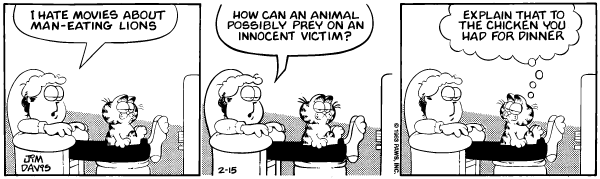
Check out heaps of information
on Vegetarianism, Prasadam-ism,
download books, Vegetarian Recipe programs, and more.
http://www.hknet.org.nz/Veges-Beyond5page.htm
http://turn.to/Vegetarianism
HERE'S
HUNDREDS OF USEFUL LINKS COMPILED 4 U:
http://www.hknet.org.nz/vege-links1.htm
A Beginners Guide to Vegetarianism:
http://people.qualcomm.com/sriharid/info/vegetarianism/veg.html
How Mary and Frank and Friends Eat - very
nice Vegetarian pages:
http://www.all-creatures.org/recipes.html
Vegetarian recipes:
http://www.vegweb.com
101 Reasons Why I'm
a Vegetarian:
http://www.vivavegie.org/vv101/index.html
Healthy Indian Vegetarian Cooking Recipes:
http://www.vegsource.com/articles/chari_veg_chili.htm
Excellent "Meat Substitute"
recipes
http://vegweb.com/food/subs/
Hundreds of Vegetarian recipes
http://vegweb.com/whatsnew/
Fat-free vegetarian meals:
A lot of inspiring Vegetarian preparations here, some have onion and
garlic in,
so replace that with hing or omit that altogether as you see fit, still
this page is well worth a serious look for ideas.
http://www.fatfree.com/new.html
ARE YOU LOOKING FOR ANYTHING IN PARTICULAR - LET ME KNOW...!
"You Mean That's in the Bible"
- expose on meat eating:
http://www.textfiles.com/occult/CHRISTIAN/ymtitb.txt

 - oxymoron of the yuga:
http://users.erols.com/epastore/veg/
Protect both our species, two-legged
and four-legged. Both food and water for their needs supply.
May they with us increase in
stature and strength. Save us from hurt all our days, O Powers!
Rig Veda Samhita 10.37.11.
Download one of Bhakti Rasa prabhu's songs
for FREE
"Don't Eat Your Friends" (It Ain't Nice)
http://bhakti-rasa.tripod.com/mp3/akarma4.mp3
and visit Bhakti Rasa prabhu's site:
http://bhakti-rasa.tripod.com/
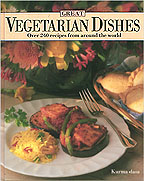
Check out Kurma prabhu's new
web-site:
http://www.kurma.net/
check out what he's doing during October 2004
http://www.kurma.net/classes/austwide.html
XMAS Recipes @ http://www.hknet.org.nz/XmasMadness.html
We wish you a Vege Xmas
McDeath - the facts about Ronnie McDonalds:
http://www.hknet.org.nz/mcdeath.html
Meet your Meat FREECDRoms
This is a must for those who live in the illusion
of animal killing is somehow acceptable or humane.
I have converted the "Meet your Meat" video into a CD rom & will send a copy of it for free to anyone with a Cd burner & a pledge to make at least 4 copies to give to their meat eating friends.
http://www.hknet.org.nz/V-meetURmeat.html
Meet your meat - shocking live footage of the
TRUTH in the meat industry:
http://www.meetyourmeat.com/
This is the new version
I sent out a total of over 750 CD's last year to 60 different
countries. My goal in 2003 is to double that number.
I would appreciate if you would forward this message
to your readers.
Anyone willing to participate, please forward my mailing
address as mailto:Chalissa1@aol.com
THIS HAS TO BE SEEN AT LEAST ONCE - SHOW YOUR MEAT
EATING FRIENDS
IF THEY ARE WORTH KEEPING AS FRIENDS THEY WILL GIVE
UP THE MEAT HABIT
Vegetarians BEWARE of Orange
Softdrinks
http://www.shreeswaminarayan.org.uk/academy/vegeter.htm
Coca-Cola (manufacturer) - Not suitable for vegetarians; lists the
following products as not vegetarian
These products contain traces of fish gelatine, which are used as a
stabiliser for beta-carotene colour.
Fanta Orange
Diet Fanta Orange
Lilt Pineapple & Grapefruit
Diet Lilt Pineapple & Grapefruit
http://www.vegsoc.org/info/stumbling.html
Soft Drinks - Some canned Orange drinks use gelatine as a carrier for
added Beta Caratine.
(This would not appear on the ingredients panel).
(Text PAMHO:5891790) ---------------------------------------
Wellington Vegetarian Society'
Newsletters
http://www.i-send.info/Host/10/index.html
You'll also notice that for October we have a book sale
of our Living a Good
Life book, and it is ideal for vegetarian families -
it covers pregnancy,
childcare and the teen years, not to mention adults and
the elderly. We've
just reprinted more copies as a result of recent demand,
and these are selling
well, with the proceeds going to vegetarian products
including a farm animal
sanctuary down our way.
Auckland's New Zealand Vegetarian
Society
....has a myriad of excellent books for sale on vegetarianism
http://www.ivu.org/nzvs/info/booklist.htm

http://www.ivu.org/nzvs/info/history.htm
see their mention on our 2004 events
Vegetarian and Vegetarian Friendly
Restaurants throughout New Zealand
http://vegsoc.wellington.net.nz/rest_list.htm
According to recent communications with ChelseaSugar
group - NZ Sugars their Sugars are now free from "Bone Char" bleaching
process and so devotees can again use and offer White Sugar safely.
See more details HERE
http://www.hknet.org.nz/veg-sugars.html
Warning:
As of last week in November 2003 Yopliat the yogurt people now put
gelatine in their products
See here for pointers of okay ones http://www.hknet.org.nz/vege-cheese.html

Please let me know what you have planned however small
or humble you may feel.........



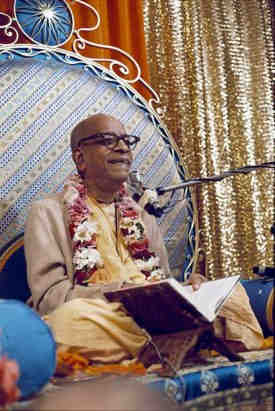

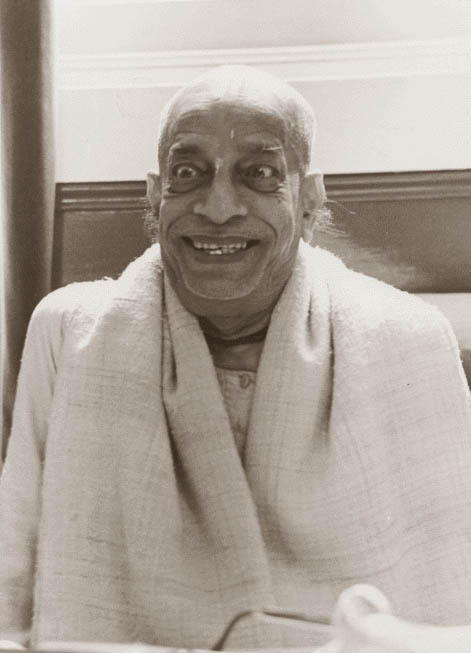
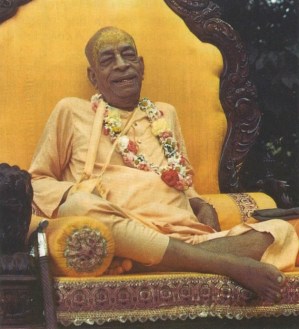
Healing with humour: Taking better care of ourselves =>;-))
http://www.hknet.org.nz/healthNhumour.html
Visit our Hasya Rasa pages
So Lord Caitanya is known as the one:
- hasya-kari & hasya-yuk ==> who laughs & jokes
- hasya-priya ==> who is fond of joking
- hasya-nagara ==> who is the hero of those expert in speaking joking words
- hasya-grami & hasya-kara ==> is expert at joking
- pushpa-hasa ==> whose smile & laugh are as charminng as flowers.
Lord Gauranga's smiling & laughing qualities ki...
ys Radhe Govinda dasa
P.S. One of the qualities of Srimati Radharani is that she is very expert
in the art of joking.
This is a MUST READ =>;-Q
http://www.digitalsawdust.com
Four Wives parable:
http://www.hknet.org.nz/4wives.pps
How many meats eaters do you need to change a lightbulb?
None--they'd rather not see how their food is made.

This man had a parrot that could talk. Unfortunately, it swore a lot. In an effort to get the parrot to be quiet, he put him in a cupboard. The parrot continued swearing and after a while the man decided to put the bird in the freezer. After that, the parrot started swearing even more. After a few minutes, he suddenly became quiet.
The man opened up the freezer and the parrot said, "I'm sorry, sir, it will never happen again."
As the man took the bird out of the freezer he wondered what the difference
was between the cupboard and the freezer.
Just then, the parrot said, "So, uh, what'd the chicken do?"
At school one day the teacher started glorifying meat-eating, declared herself as a meat eater and asking the children to put up their hands if they liked eating meat too. All the children in the class put up their hands except little Govinda.
"Govinda, why are you not putting your hand up?" asked the teacher.
"Because I don't eat meat, I'm a vegetarian." replied Govinda proudly.
"Why are you a vegetarian? You know there are less vegetarians in New Zealand than us carnivors, and you have to get your iron from somewhere......." she challenged.
"My parents are both vegetarians, their parents were vegetarians, all my other relatives are also vegetarian, we were brought up vegetarian and I like being a vegetarian !!!"
"Well," said the teacher in an obviously annoyed tone, "...that is no real reason for you to go against society and be a vegetarian. You don't have to be just like your parents all of the time. Why, what if your Mom was a moron and your dad was a moron, what would you be then?"
"Then," Little Govinda smiled and said with impunity, "We'd be meat eaters like you too."

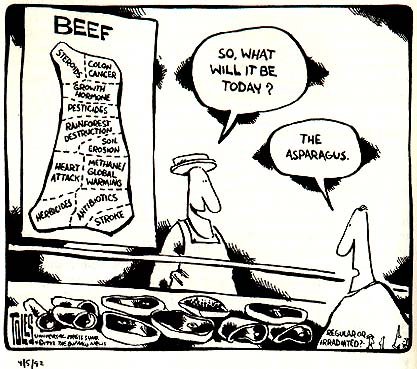
Everything is changing in the world today.
People are taking the comedians seriously and the politicians as a joke.
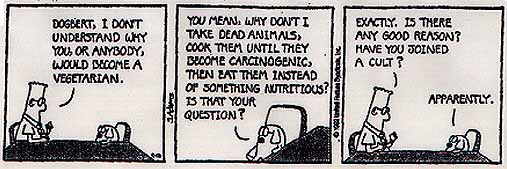
Did you ever wonder?
Meat-eater: Did you hear about the new study saying vegans are
more likely to go blind?
I guess it's because you don't get the proper nutrition.
Vegan: Nah, it's just from straining our eyes reading all of those tiny ingredients lists.
If vegetarians eat vegetables, what do humanitarians eat?
The secret of success is sincerity.
Once you can fake that you've got it made.
...the Mad Butcher
Limerick
There was an old fellow called Lear
Who existed on oysters and beer.
He traveled to Spain,
Never came back again,
But I think I can smell him from here!
from Patricia
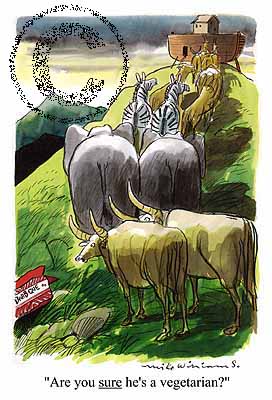
Some one line groaners 4 you......
Those who jump off a bridge in Paris are in Sein.
A man's home is his castle, in a manor of speaking.
Dijon vu - the same mustard as before.
Practice safe eating - always use condiments.
Does the name Pavlov ring a bell?
Reading while sunbathing makes you well red.
When two egotists meet, it's an I for an I.
Definition of a will: A dead give away.
Time flies like an arrow. Fruit flies like a banana.
In democracy your vote counts. In feudalism your count votes.
She was engaged to a boyfriend with a wooden leg but broke it off.
A chicken crossing the road is poultry in motion.
If you don't pay your exorcist, you get repossessed.
The man who fell into an upholstery machine is now fully recovered.
You feel stuck with your debt if you can't budge it.
Local Area Network in Australia: the LAN down under.
Every calendar's days are numbered.
A lot of money is tainted - It taint yours and it taint mine.
A midget fortune-teller who escapes from prison is a small medium at large.
Those who get too big for their britches will be exposed in the end
Once you've seen one shopping center, you've seen a mall.
Bakers trade bread recipes on a knead-to-know basis.
There were three men who were lost in the forest. They were then captured by cannibals. The cannibal king then told the prisoners that they could live if they pass the trial. First step of the trial is to go to the forest with the cannibals and get ten pieces of the same kind of fruit. So all three men went separate ways to gather fruits.
The first one came back and said to the king, "I brought ten apples." The king then explains the trial to him. You have to shove the fruits up your bottom without any expression on your face or you'll be eaten. The first apple went in... but on the second one he winced out in pain, so he was killed and went to heaven.
The second one arrives and shows the king his ten fruits were berries. When the king explained the trial to him he thought to himself that this should be easy. 1...2...3...4...5...6...7...8... on the ninth berry he burst out in laughter, therefore also was killed.
The first guy and the second guy met in heaven.
The first one asked, "Why did you laugh, you almost got away with it?"
The second one replied, "I couldn't help it, I saw that the third guy
coming back with watermelons."
Collective Nouns For Doctors
A Buttload of Proctologists
A Supporting Cast of Orthopedists
A Hive of Allergists
A Press of Dental Hygienists
A Carvery of Surgeons
A Spread of Gynecologists
A Golf-cart of Private-physicians
A Growth of Oncologists
A Vision of Optometrists
An Insanity of Psychologists
The ways of this material world - strange but true
A husband and wife were sitting around talking about their hard day at work and the wife was complaining that she needed to be more assertive to get anywhere, etc. when her husband told her, "You know what the problem is don't you?
It's a dog eat dog world out there, and you're a vegetarian!"
Two church members were going door to door, and knocked on the door of a woman who was not happy to see them. She told them in no uncertain terms that she did not want to hear their message, and slammed the door in their faces.
To her surprise, however, the door did not close and, in fact, bounced back open. She tried again, really put her back into it, and slammed the door again with the same result -- the door bounced back open.
Convinced these rude young people were sticking their foot in the door, she reared back to give it a slam that would teach them a lesson, when one of them said,
"Ma'am, before you do that again you need to move your cat."

......what ......you never seen a salad dressing?????
Sweets and cakes are the destiny that shapes our ends.
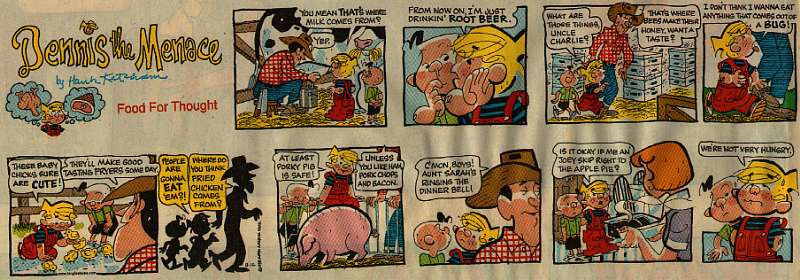
I had a dream the other night. I was in the old West riding in a stagecoach.
Suddenly, a man riding a horse pulls up to the left side of the stagecoach,
and a riderless horse pulls up on the right.
The man leans down, pulls open the door, and jumps off his horse into the stagecoach.
Then he opens the other door and jumps onto the other horse.
Just before he rode off, I yelled out, "What was all that about?"
He replied, "Nothing. It's just a stage I'm going through."
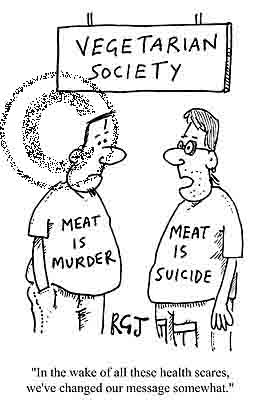
This is a funniest tongue in cheek send up of a typical
meat eater's cook book you'll ever see
http://www.lileks.com/institute/gallery/meat/index.html
by Dr. Frank Einstein, Ph.d. (Post Hole Digger)
Lacto-Boozo
As a lacto-boozo-vegetarian I am concerned about the amount of vitamin
B-52 in my diet. I have been told that drinking two cups of Irish coffee
each day will ensure I get an adequate amount of this important nutrient.
Is this true?
- Fred Tirebiter, Kingston, Ontario
First of all I would like to address the misconception, held throughout much of Canada but of greatest popularity in British California, that Irish coffee is a so-called "perfect" meal nutritionally; supplying ingredients from each of the basic four food groups. Contrary to popular belief, fat, sugar, alcohol and caffeine, all abundantly present in Irish coffee, are not the basic four food groups. Fruits, vegetables, grains and legumes, on the other hand, are the components that make up the real basic four. The lacto-boozo Vegetarian option is not a particularly healthy one. I recommend the restriction (if not out-and-out elimination) of both alcohol and milk in the diet. Alcohol does not provide much in the way of nutrition and has been associated with numerous health debilitations. And, after considering the increasing evidence linking milk to such diseases as osteoporosis, several cancers, heart disease and hypertension, and considering as well the abundance of alternative vegetable, grain and legume sources for such nutrients as calcium and B12, why bother with milk at all?
Spring Water
Doctor Einstein, I am a big fan of yours (6'4" and 220 pounds). I have
read all your books and seen all your movies. My question concerns spring
water. Is it really all it's cracked up to be?
- Pierre Leau, Montreal, Quebec
Thank you very much for your wonderful comments, Pierre. In my opinion
spring water is highly overrated and my preference is for Fall and Summer
water. Winter run-off adds decaying organic material, salts and other chemicals
to Canadian water supplies in the spring, compromising the quality of water
at
this time.
Xtra-cholesterols and Unidentified Fried Objects
Do extra-cholesterols really abduct people, take them to their far-off
restaurants, forcefully impregnating them with body-parts from mutilated
animals, and then leave them, days later, naked and constipated, in mysterious
crop circles? Are there slaughterhouses elsewhere in the universe? There
have been numerous sightings of Unidentified Fried Objects in my neighborhood
over the past several weeks and I am definitely worried!
- Fox Muldar, Hongcouver, British California
The strongest evidence for the existence of intelligent life elsewhere in the universe is that they have wisely left us Earthlings alone! Most sightings of Unidentified Fried Objects turn out, upon carefully investigation, to be nothing more than bacon, hamburger or weather balloons - keep them out of your mouth and you have nothing to worry about. The real abductions to be concerned about on this planet are not of our bodies but of our minds. Advertising, government lobbying and other propaganda measures by terrestrials have been highly successful for decades, at the promotion of slaughterhouse industries. If extra-cholesterols actually exist and really wanted us eating carrion (dead animals), I think they would be more likely to invest their energies in brain-washing rather than kidnapping - perhaps they already have.
If an expert is someone that knows more and more about less and less,
then Dr. Einstein has reached the pinnacle of expertness - he knows absolutely
everything there is to know about nothing.
and always remember (don't forget...)
Please Try our little Colour Test - Right Brain vs Left Brain:
http://www.njagyouth.org/colortest.swf


A Grateful Word to our Supporters
 to all the readers who have
one way or another subscribed to N.Z.H.K.S.R.Network.
to all the readers who have
one way or another subscribed to N.Z.H.K.S.R.Network.
Your interest and support makes this work possible.
A special thanx for the devotees who are sponsoring the site over 2004-2005

Those wishing to contribute to this Net-work, send articles, and or information please do so by contacting me here ...
Similarly if anyone would like to send donations to help maintain this
and similar work,
especially on a regular basis please contact me here also ...

Every little is VERY much appreciated, and is what allows the service
to continue regularly. Thanx
Donations can be made on-line at http://www.hknet.org.nz/ through our PayPal account.

We apologise for any inconvenience caused.
*DISCLAIMER: All information featured in this newsletter is verified with the original source. I cannot assume responsibility for the accuracy of the information or for the consequences of its use.
*COPYRIGHT NOTICE: In accordance with Title 17 U. S. C. Section 107, and International Copyright law, any copyrighted work in this message is distributed under "fair use" without profit or payment to those who have expressed a prior interest in receiving the included information for nonprofit research and educational purposes only.


THE  !!!
!!!
